Word Explanation
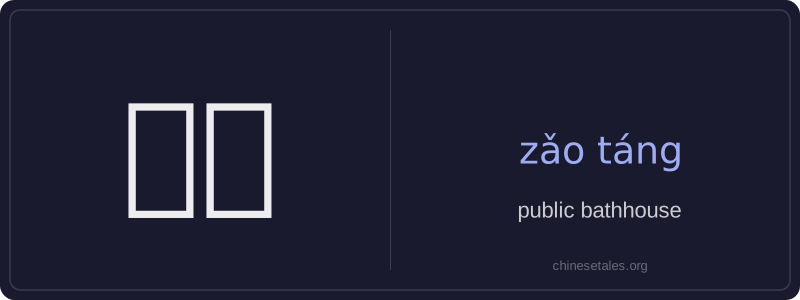
‘澡堂’ (zǎo táng) literally combines ‘澡’ (zǎo), meaning ‘bath’ or ‘to bathe’, and ‘堂’ (táng), a classical term for a hall, building, or public space — together forming ‘bath hall’ or ‘public bathhouse’. Historically common in northern China, especially in colder cities like Beijing and Harbin, 澡堂s are communal facilities where people wash, soak, and often receive massage or scrubbing services. They reflect traditional Chinese hygiene culture and social customs, serving not only hygienic but also leisurely and communal functions.
While modern apartments often have private bathrooms, many older neighborhoods and workplaces still maintain public 澡堂s, particularly for residents without in-home hot water. The word carries a nostalgic or regional connotation today — it’s rarely used to refer to Western-style gyms or spas, which use terms like ‘spa’ or ‘fitness center’. It implies a distinctly local, often no-frills, shared bathing environment with separate men’s and women’s sections.
Example Sentences
Related Words
背后
背后 literally means 'back + behind' and functions
认同
‘认同’ (tóng rèn) is a verb meaning ‘to ident
不对
不对 (bù duì) literally combines 不 (bù), meani
中学
'Zhōngxué' literally combines 'zhōng' (middle)
见面
见面 literally means 'see face' — combining 见 (t
面条
‘面条’ (miàn tiáo) literally means ‘flour str
外语
‘外语’ literally means ‘outside language’ —
无论谁
‘无论谁’ (wú lùn shéi) is a pronoun meaning