Word Explanation
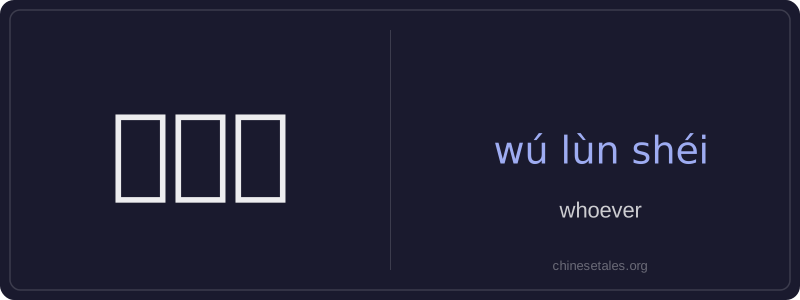
‘无论谁’ (wú lùn shéi) is a pronoun meaning ‘whoever’ or ‘no matter who’. It’s a compound structure: ‘无’ (wú, ‘not’) + ‘论’ (lùn, ‘to discuss’ or ‘to consider’) + ‘谁’ (shéi, ‘who’), literally ‘not discuss who’, conveying the idea that identity is irrelevant—the statement applies universally. It introduces a conditional clause and is commonly used to express inclusivity or inevitability regardless of the person involved.
This phrase often appears at the beginning of a sentence before a verb or adjective, followed by a main clause introduced by ‘都’ (dōu, ‘all/even’) or ‘都…了’ for emphasis. It’s neutral in register—suitable for both spoken and written Chinese—and frequently used in everyday contexts like rules, promises, warnings, or generalizations about human behavior or responsibilities.
Example Sentences
Related Words
见面
见面 literally means 'see face' — combining 见 (t
后来
Later (hòulái) is an adverb meaning 'afterwards'
背后
背后 literally means 'back + behind' and functions
我的
我的 (wǒ de) is a possessive pronoun meaning 'my'
这么
这么 (zhè me) is an adverb meaning 'so' or 'this
中学
'Zhōngxué' literally combines 'zhōng' (middle)
前面
前面 (qián miàn) literally combines 前 (qián, '
面条
‘面条’ (miàn tiáo) literally means ‘flour str