Word Explanation
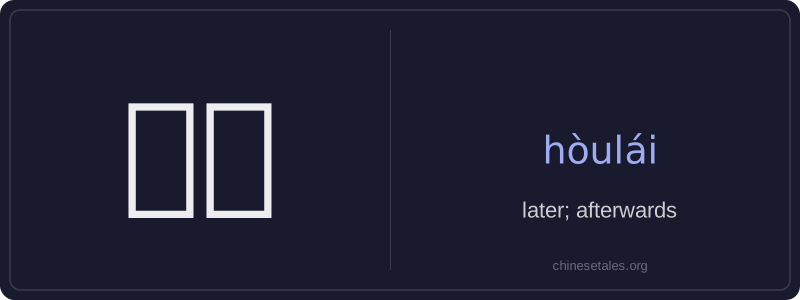
Later (hòulái) is an adverb meaning 'afterwards' or 'subsequently' — it indicates something that happens after a previously mentioned event, time, or situation. The character 后 (hòu) means 'behind' or 'after', and 来 (lái) means 'to come'; together, they literally suggest 'what comes after'. It’s commonly used to mark a shift in time within a narrative, often appearing at the beginning of a sentence or clause.
This word is neutral in register and appears frequently in both spoken and written Chinese — especially in storytelling, personal anecdotes, and explanations of cause-and-effect sequences. Unlike time nouns such as 以后 (yǐhòu), 后来 functions purely adverbially and does not require particles like 的 or 了 to indicate completion. It emphasizes chronological sequence rather than duration or deadline, and is rarely used with specific time markers like 'three days later' (for which 三天后 is preferred).
Example Sentences
Related Words
我的
我的 (wǒ de) is a possessive pronoun meaning 'my'
中国
‘Zhōngguó’ literally means ‘Middle Kingdom’
红色的
红色的 (hóng sè de) is an adjective meaning 'red
一天
‘一天’ literally combines the numeral ‘一’ (y
在家
'Zài jiā' literally combines the preposition 'z
不对
不对 (bù duì) literally combines 不 (bù), meani
这边
这边 (zhè biān) literally combines 这 (zhè, 'th
这么
这么 (zhè me) is an adverb meaning 'so' or 'this