Word Explanation
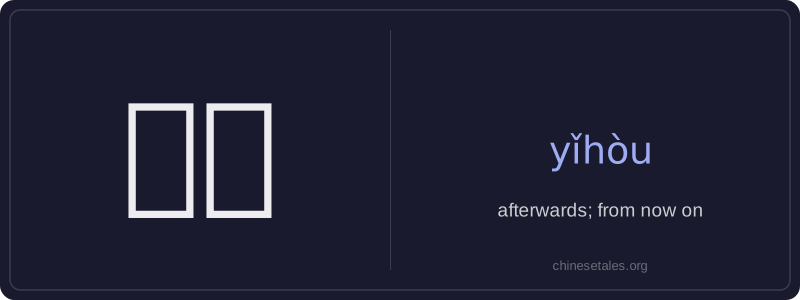
以后 (yǐhòu) literally combines 以 (yǐ, 'by' or 'with') and 后 (hòu, 'behind' or 'after'), together meaning 'after [a point in time]' or 'from now on'. As an adverb, it most commonly indicates a time following a specific event or moment — for example, after finishing school or after turning 30. It can also function as a noun meaning 'the future' or 'later times', especially in formal or written contexts.
Unlike the more colloquial 之后 (zhīhòu), 以后 is neutral in register and widely used in both spoken and written Chinese. It typically follows a time expression (e.g., 明天以后, 'after tomorrow') or a verb phrase (e.g., 毕业以后, 'after graduation'). When used without a preceding time reference, it often implies 'from now on' — signaling a change in behavior, habit, or situation starting at the present moment.
Example Sentences
Related Words
我的
我的 (wǒ de) is a possessive pronoun meaning 'my'
中国
‘Zhōngguó’ literally means ‘Middle Kingdom’
红色的
红色的 (hóng sè de) is an adjective meaning 'red
一天
‘一天’ literally combines the numeral ‘一’ (y
在家
'Zài jiā' literally combines the preposition 'z
不对
不对 (bù duì) literally combines 不 (bù), meani
这边
这边 (zhè biān) literally combines 这 (zhè, 'th
这么
这么 (zhè me) is an adverb meaning 'so' or 'this