Word Explanation
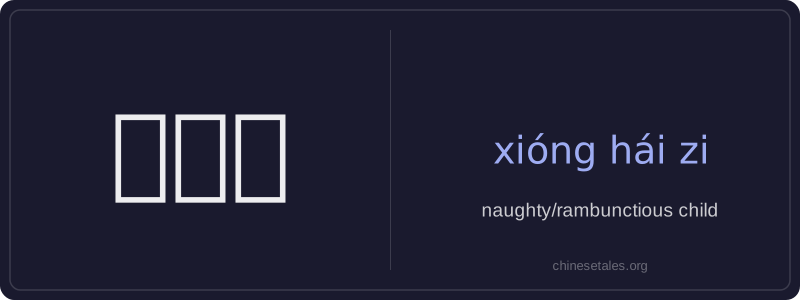
'Xióng hái zi' literally combines 'bear' (熊) and 'child' (孩子), but it doesn’t refer to a bear cub—it’s a playful, slightly teasing slang term for a mischievous, unruly, or overly energetic child who tests boundaries. The character 熊 here functions metaphorically: just as bears can be strong, unpredictable, and hard to control, so too is the 'xiónɡ hái zi'—often loud, impulsive, and difficult to manage in public or group settings.
This term is widely used in informal spoken and online Chinese, especially by parents, teachers, or bystanders describing behavior like throwing tantrums in restaurants, running through stores, or refusing to follow instructions. Though mildly critical, it’s rarely harsh or malicious—it carries affectionate exasperation rather than true condemnation. It’s not used for very young toddlers (who lack intent) nor for teenagers (who fall outside the 'child' scope); it most commonly applies to kids aged roughly 3–10.
Example Sentences
Related Words
背后
背后 literally means 'back + behind' and functions
认同
‘认同’ (tóng rèn) is a verb meaning ‘to ident
不对
不对 (bù duì) literally combines 不 (bù), meani
中学
'Zhōngxué' literally combines 'zhōng' (middle)
见面
见面 literally means 'see face' — combining 见 (t
面条
‘面条’ (miàn tiáo) literally means ‘flour str
外语
‘外语’ literally means ‘outside language’ —
无论谁
‘无论谁’ (wú lùn shéi) is a pronoun meaning