Word Explanation
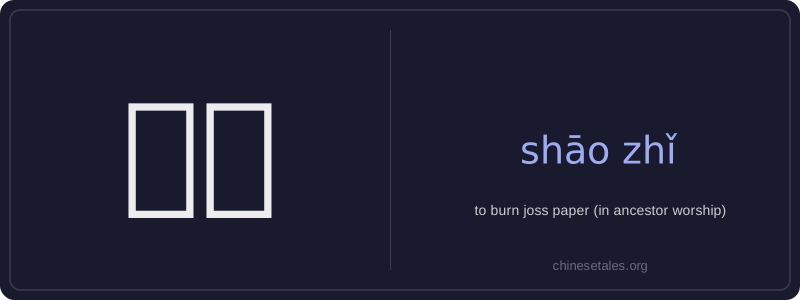
'Shāo zhǐ' literally means 'to burn paper' — the character 烧 (shāo) means 'to burn' or 'to fire', and 纸 (zhǐ) means 'paper'. In traditional Chinese folk religion and ancestor worship, it refers specifically to the ritual burning of joss paper (also called spirit money or ghost money), which is believed to provide financial resources for deceased ancestors in the afterlife. This practice is commonly observed during Qingming Festival (Tomb-Sweeping Day), the Ghost Festival (Zhongyuan Jie), and on anniversaries of a loved one’s death.
The act is deeply symbolic rather than literal: the paper is often folded into gold or silver ingots, printed with auspicious symbols, or shaped like everyday items such as houses or clothes. While the physical act is simple — lighting the paper in a metal basin or designated area — it carries strong cultural weight, expressing filial piety, remembrance, and spiritual care. It is usually performed outdoors or at temples, never indoors due to safety and ritual propriety.
Example Sentences
Related Words
背后
背后 literally means 'back + behind' and functions
认同
‘认同’ (tóng rèn) is a verb meaning ‘to ident
不对
不对 (bù duì) literally combines 不 (bù), meani
中学
'Zhōngxué' literally combines 'zhōng' (middle)
见面
见面 literally means 'see face' — combining 见 (t
面条
‘面条’ (miàn tiáo) literally means ‘flour str
外语
‘外语’ literally means ‘outside language’ —
无论谁
‘无论谁’ (wú lùn shéi) is a pronoun meaning