Word Explanation
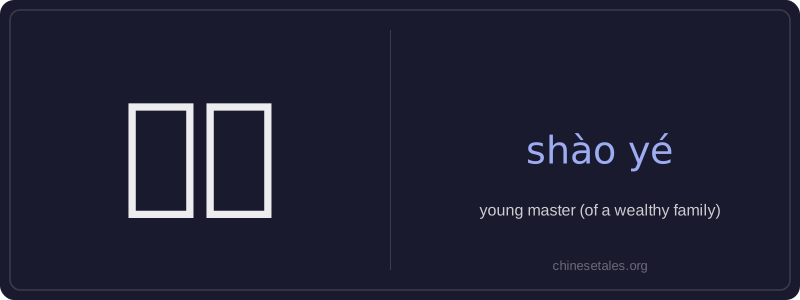
'Shào yé' literally combines 'shào' (young, junior) and 'yé' (a respectful title for an elder or master), together forming a traditional term for the young male heir of a wealthy or influential family—often in historical or literary contexts. It conveys privilege, social status, and sometimes gentle satire or nostalgia.
The term is rarely used in modern daily life but appears frequently in period dramas, novels, and films set in pre-1949 China. It implies not just youth but also inherited authority, education, and responsibility within the family hierarchy. Unlike neutral terms like 'son', 'shào yé' carries strong cultural resonance tied to class, tradition, and familial duty—and may subtly suggest indulgence or immaturity depending on context.
Example Sentences
Related Words
背后
背后 literally means 'back + behind' and functions
认同
‘认同’ (tóng rèn) is a verb meaning ‘to ident
不对
不对 (bù duì) literally combines 不 (bù), meani
中学
'Zhōngxué' literally combines 'zhōng' (middle)
见面
见面 literally means 'see face' — combining 见 (t
面条
‘面条’ (miàn tiáo) literally means ‘flour str
外语
‘外语’ literally means ‘outside language’ —
无论谁
‘无论谁’ (wú lùn shéi) is a pronoun meaning