Word Explanation
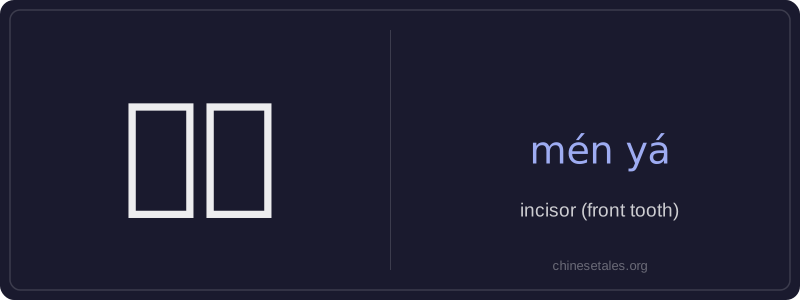
‘门牙’ literally means ‘door tooth’ — the character 门 (mén) evokes the idea of a doorway or entrance, and 牙 (yá) means ‘tooth’. Together, they refer specifically to the four front teeth in the upper and lower jaws — the central and lateral incisors — which are most visible when smiling or speaking. These teeth play key roles in biting food and shaping speech sounds like ‘f’, ‘v’, and ‘th’.
In everyday Chinese, ‘门牙’ is used in both casual and medical contexts, though it’s more common in informal speech than clinical terms like 切牙 (qiē yá, ‘incisor’). People often mention their 门牙 when discussing dental health, orthodontics, childhood accidents (e.g., falling and chipping a front tooth), or cosmetic concerns like gaps or discoloration. Unlike broader terms such as 牙齿 (yá chǐ, ‘teeth’), 门牙 highlights visibility and function at the ‘front door’ of the mouth.
Example Sentences
Related Words
背后
背后 literally means 'back + behind' and functions
认同
‘认同’ (tóng rèn) is a verb meaning ‘to ident
不对
不对 (bù duì) literally combines 不 (bù), meani
中学
'Zhōngxué' literally combines 'zhōng' (middle)
见面
见面 literally means 'see face' — combining 见 (t
面条
‘面条’ (miàn tiáo) literally means ‘flour str
外语
‘外语’ literally means ‘outside language’ —
无论谁
‘无论谁’ (wú lùn shéi) is a pronoun meaning