Word Explanation
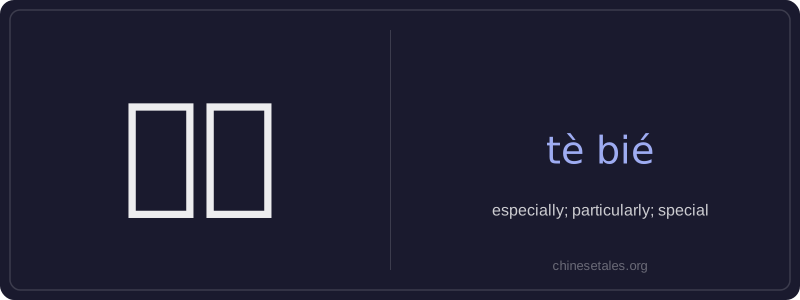
特别 (tè bié) is a versatile word meaning 'especially', 'particularly', or 'special', depending on context. The character 特 means 'unusual' or 'distinctive', while 别 means 'other' or 'different' — together, they convey a sense of standing apart from the norm. As an adverb, it modifies verbs, adjectives, or entire clauses to emphasize degree or uniqueness ('especially tasty', 'particularly interested'). As an adjective, it describes something inherently distinctive ('a special occasion'). It's common in both spoken and written Chinese and carries a neutral-to-positive connotation.
This word frequently appears in comparisons, personal preferences, and emotional expressions — for example, when highlighting what makes someone or something stand out. Unlike 很 (hěn), which simply means 'very', 特别 adds nuance of singularity or exceptionality. It’s often used before adjectives (e.g., 特别好) or verbs (e.g., 特别喜欢), and can also function predicatively after 是 (shì) or as a noun modifier with 的 (de).
Example Sentences
Related Words
背后
背后 literally means 'back + behind' and functions
认同
‘认同’ (tóng rèn) is a verb meaning ‘to ident
不对
不对 (bù duì) literally combines 不 (bù), meani
中学
'Zhōngxué' literally combines 'zhōng' (middle)
见面
见面 literally means 'see face' — combining 见 (t
面条
‘面条’ (miàn tiáo) literally means ‘flour str
外语
‘外语’ literally means ‘outside language’ —
无论谁
‘无论谁’ (wú lùn shéi) is a pronoun meaning