Word Explanation
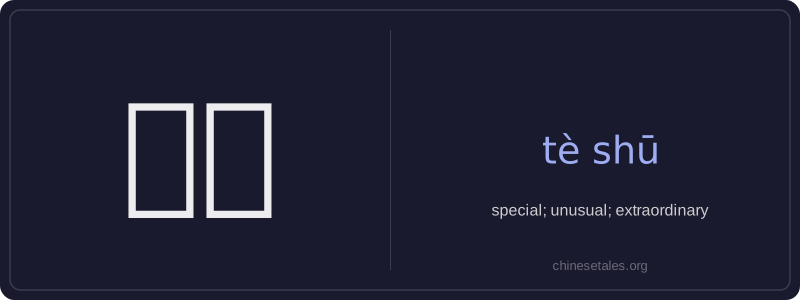
特殊 (tè shū) is an adjective meaning 'special,' 'unusual,' or 'extraordinary.' It combines two characters: 特 (tè), which conveys uniqueness or distinction, and 殊 (shū), which means 'different' or 'exceptional.' Together, they emphasize a quality that sets something apart from the ordinary—often implying rarity, significance, or deviation from the norm. Unlike colloquial terms like 特别 (tè bié), which can be used more casually for 'very' or 'especially,' 特殊 carries a more formal, objective tone and frequently appears in official, scientific, or descriptive contexts.
This word commonly modifies nouns to indicate distinctive properties—e.g., special needs, special species, or special circumstances. It’s often used in education, law, ecology, and medicine to denote categories requiring differentiated treatment. While it can describe positive traits (e.g., a special talent), it may also neutrally describe anomalies or exceptions without value judgment—such as a 特殊的动物 (a special/exceptional animal) with unique biological features.
Example Sentences
Related Words
背后
背后 literally means 'back + behind' and functions
认同
‘认同’ (tóng rèn) is a verb meaning ‘to ident
不对
不对 (bù duì) literally combines 不 (bù), meani
中学
'Zhōngxué' literally combines 'zhōng' (middle)
见面
见面 literally means 'see face' — combining 见 (t
面条
‘面条’ (miàn tiáo) literally means ‘flour str
外语
‘外语’ literally means ‘outside language’ —
无论谁
‘无论谁’ (wú lùn shéi) is a pronoun meaning