Word Explanation
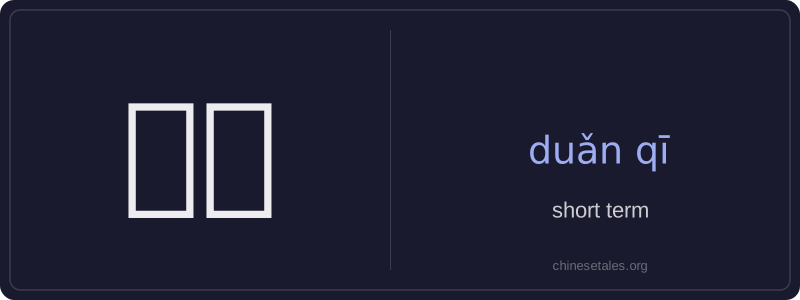
'短期' literally combines 短 (duǎn, 'short') and 期 (qī, 'period' or 'term'), meaning a brief, limited duration of time. It functions primarily as a noun ('the short term') but frequently serves as an attributive adjective before nouns — for example, 短期目标 (short-term goal) or 短期计划 (short-term plan). Unlike standalone time words like 天 or 年, 短期 is abstract and relative: what counts as 'short' depends on context — days for a project, months for a job, or years in economic policy.
This term appears commonly in academic, business, and everyday planning contexts. It often contrasts with 长期 (cháng qī, 'long term'), highlighting temporal scope rather than absolute length. While it can stand alone in phrases like '从短期看' ('from a short-term perspective'), it’s most natural when modifying a noun or appearing in set expressions involving goals, effects, loans, or stays.
Example Sentences
Related Words
背后
背后 literally means 'back + behind' and functions
认同
‘认同’ (tóng rèn) is a verb meaning ‘to ident
不对
不对 (bù duì) literally combines 不 (bù), meani
中学
'Zhōngxué' literally combines 'zhōng' (middle)
见面
见面 literally means 'see face' — combining 见 (t
面条
‘面条’ (miàn tiáo) literally means ‘flour str
外语
‘外语’ literally means ‘outside language’ —
认可
认可 (rèn kě) is a formal, transitive verb meani