Word Explanation
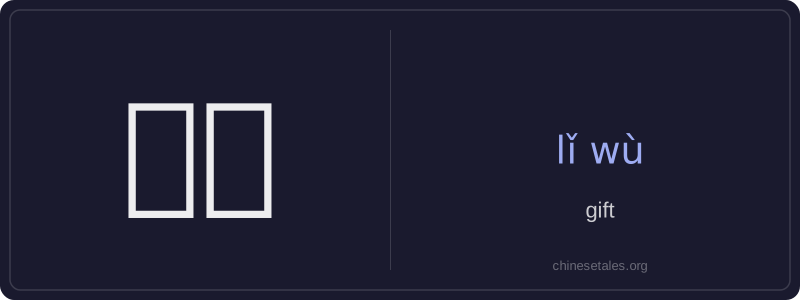
‘礼物’ (lǐ wù) literally combines ‘礼’ (lǐ), meaning ‘ritual,’ ‘courtesy,’ or ‘respect,’ and ‘物’ (wù), meaning ‘thing’ or ‘object.’ Together, they form the word for ‘gift’—an item given to express goodwill, gratitude, celebration, or respect. Unlike casual terms like ‘小玩意儿’ (xiǎo wán yì ér, ‘trinket’), ‘礼物’ carries a sense of intentionality and social meaning, often tied to occasions like birthdays, weddings, holidays, or visits to someone’s home.
This noun is commonly used in both spoken and written Chinese, and it functions as a standard, neutral term—neither overly formal nor slangy. It appears frequently in phrases like ‘送礼物’ (sòng lǐ wù, ‘to give a gift’), ‘收礼物’ (shōu lǐ wù, ‘to receive a gift’), and ‘挑选礼物’ (tiāo xuǎn lǐ wù, ‘to choose a gift’). While ‘礼物’ can refer to physical items only, context sometimes implies symbolic or experiential gifts (e.g., ‘一份心意’—a token of affection—but those are not called ‘礼物’ directly).
Example Sentences
Related Words
背后
背后 literally means 'back + behind' and functions
认同
‘认同’ (tóng rèn) is a verb meaning ‘to ident
不对
不对 (bù duì) literally combines 不 (bù), meani
中学
'Zhōngxué' literally combines 'zhōng' (middle)
见面
见面 literally means 'see face' — combining 见 (t
面条
‘面条’ (miàn tiáo) literally means ‘flour str
外语
‘外语’ literally means ‘outside language’ —
认可
认可 (rèn kě) is a formal, transitive verb meani