Word Explanation
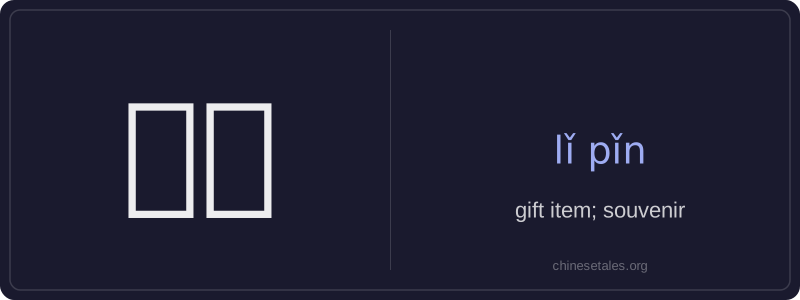
‘礼品’ (lǐ pǐn) literally combines 礼 (lǐ), meaning ‘ritual,’ ‘courtesy,’ or ‘etiquette,’ and 品 (pǐn), meaning ‘item,’ ‘article,’ or ‘product.’ Together, it refers to a physical object given to express goodwill, appreciation, congratulations, or respect — essentially a ‘gift item’ or ‘souvenir.’ Unlike the more general word 礼物 (lǐ wù), which emphasizes the act of giving and emotional intent, 礼品 often implies something selected, packaged, and presented formally — such as corporate giveaways, wedding favors, or commemorative items.
This term is commonly used in commercial, ceremonial, and hospitality contexts: hotels may offer welcome 礼品, companies distribute branded 礼品 at trade fairs, and tourists buy local specialty 礼品 as keepsakes. It carries a slightly more formal or institutional tone than 礼物 and is rarely used for spontaneous or deeply personal gifts like birthday presents among close friends.
Example Sentences
Related Words
背后
背后 literally means 'back + behind' and functions
认同
‘认同’ (tóng rèn) is a verb meaning ‘to ident
不对
不对 (bù duì) literally combines 不 (bù), meani
中学
'Zhōngxué' literally combines 'zhōng' (middle)
见面
见面 literally means 'see face' — combining 见 (t
面条
‘面条’ (miàn tiáo) literally means ‘flour str
外语
‘外语’ literally means ‘outside language’ —
认可
认可 (rèn kě) is a formal, transitive verb meani