Word Explanation
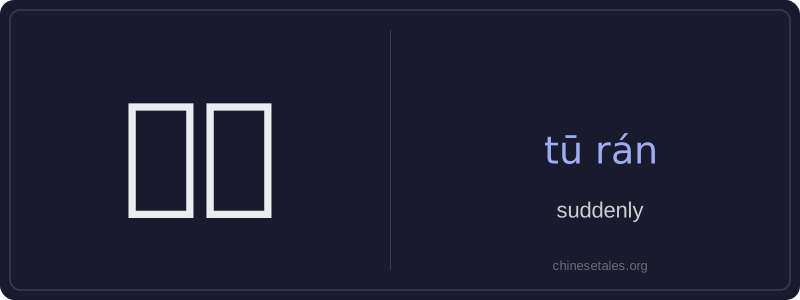
突然 (tū rán) is an adverb meaning 'suddenly' — it describes how an action or event occurs without warning, in an unexpected or abrupt way. The character 突 (tū) originally means 'to burst forth' or 'to protrude', suggesting a forceful emergence; 然 (rán) is a classical suffix that adds a sense of 'in this manner' or 'thus'. Together, they convey the idea of something happening with immediacy and surprise, like a spark igniting or a thought striking mid-conversation.
This word commonly modifies verbs (e.g., 突然出现, 突然下雨) and often appears at the beginning or middle of a sentence. It’s neutral in register — used in both spoken and written Chinese — and frequently pairs with clauses expressing contrast (e.g., 'but suddenly...', 'and suddenly...'). While it can occasionally function as a noun ('a sudden occurrence') in formal writing, its overwhelming use is adverbial.
Example Sentences
Related Words
背后
背后 literally means 'back + behind' and functions
认同
‘认同’ (tóng rèn) is a verb meaning ‘to ident
不对
不对 (bù duì) literally combines 不 (bù), meani
中学
'Zhōngxué' literally combines 'zhōng' (middle)
见面
见面 literally means 'see face' — combining 见 (t
面条
‘面条’ (miàn tiáo) literally means ‘flour str
外语
‘外语’ literally means ‘outside language’ —
认可
认可 (rèn kě) is a formal, transitive verb meani