Word Explanation
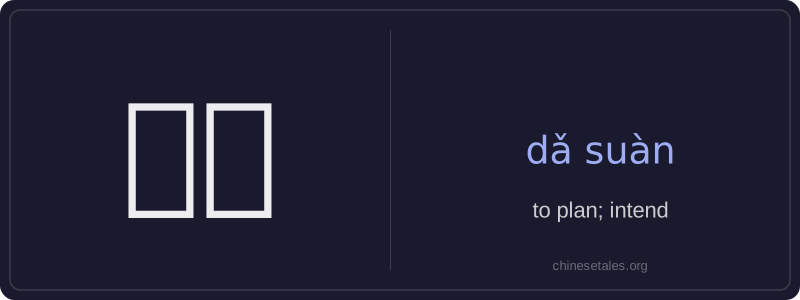
‘打算’ (dǎ suàn) is a verb meaning 'to plan' or 'to intend' to do something. Though it contains the characters 打 (dǎ, often meaning 'to hit' or used as a verb prefix) and 算 (suàn, meaning 'to calculate' or 'to consider'), together they form an idiom where 打 functions as a light verb and 算 carries the core meaning of 'reckoning' or 'deliberation'—so literally 'to reckon/consider doing something.' It expresses a future-oriented intention that is still tentative or in the planning stage, not yet committed or executed.
This word is commonly used in everyday speech and writing when talking about personal plans, decisions, or goals—such as travel, study, work, or daily activities. It typically appears before a verb phrase (e.g., 打算去北京, 打算学汉语) and can be modified by time words like 明天 or 下个月. Unlike 决定 (to decide), 打算 implies less certainty; unlike 想 (to want), it conveys more concrete intention backed by some thought or preparation.
Example Sentences
Related Words
背后
背后 literally means 'back + behind' and functions
认同
‘认同’ (tóng rèn) is a verb meaning ‘to ident
不对
不对 (bù duì) literally combines 不 (bù), meani
中学
'Zhōngxué' literally combines 'zhōng' (middle)
见面
见面 literally means 'see face' — combining 见 (t
面条
‘面条’ (miàn tiáo) literally means ‘flour str
外语
‘外语’ literally means ‘outside language’ —
认可
认可 (rèn kě) is a formal, transitive verb meani