Word Explanation
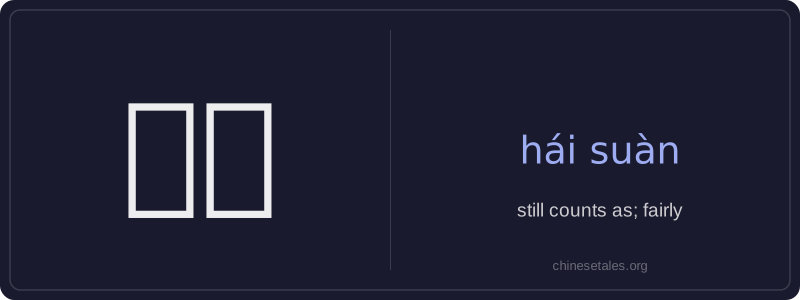
'还算' is an adverbial phrase meaning 'still counts as' or 'fairly' — it expresses a moderate, somewhat positive evaluation that falls short of being fully excellent or ideal, yet remains acceptable or commendable. The character '还' (hái) here conveys 'still' or 'yet', suggesting something persists despite expectations to the contrary; '算' (suàn) means 'to count as' or 'to be considered', lending a sense of judgment or classification. Together, they form a soft evaluative marker often used in spoken and written Chinese to temper praise or concede partial success.
This phrase typically appears before adjectives (e.g., 还算不错, 还算顺利) or verbs (e.g., 还算过得去), and carries a conversational, slightly understated tone — common in daily exchanges about experiences, outcomes, or personal assessments. It implies relativity: the speaker is comparing the situation to unstated norms or expectations, not making an absolute claim.
Example Sentences
Related Words
背后
背后 literally means 'back + behind' and functions
认同
‘认同’ (tóng rèn) is a verb meaning ‘to ident
不对
不对 (bù duì) literally combines 不 (bù), meani
中学
'Zhōngxué' literally combines 'zhōng' (middle)
见面
见面 literally means 'see face' — combining 见 (t
面条
‘面条’ (miàn tiáo) literally means ‘flour str
外语
‘外语’ literally means ‘outside language’ —
认可
认可 (rèn kě) is a formal, transitive verb meani