Word Explanation
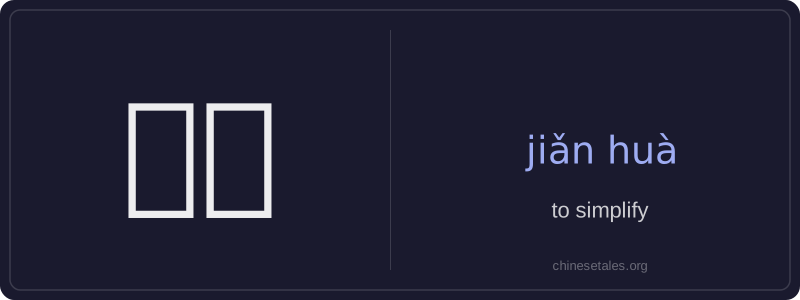
简化 (jiǎn huà) is a verb meaning 'to simplify' — to make something less complex, easier to understand, or more efficient by removing unnecessary parts or steps. The first character 简 (jiǎn) means 'simple', 'brief', or 'uncomplicated', while the second character 化 (huà) is a common suffix meaning 'to change into' or 'to transform'. Together, they literally convey 'transforming into something simple'. This word is frequently used in contexts involving processes, instructions, designs, language, or administrative procedures.
It commonly appears in both formal and informal registers — for example, in education (simplifying grammar rules), technology (simplifying user interfaces), or daily life (simplifying a recipe). It often follows a noun indicating what is being simplified (e.g., 简化流程 'simplify the process') or appears with objects introduced by 把 or 被 in passive constructions. While it can occasionally function as a noun ('simplification'), its primary and most frequent use is verbal.
Example Sentences
Related Words
背后
背后 literally means 'back + behind' and functions
认同
‘认同’ (tóng rèn) is a verb meaning ‘to ident
不对
不对 (bù duì) literally combines 不 (bù), meani
中学
'Zhōngxué' literally combines 'zhōng' (middle)
见面
见面 literally means 'see face' — combining 见 (t
面条
‘面条’ (miàn tiáo) literally means ‘flour str
外语
‘外语’ literally means ‘outside language’ —
认可
认可 (rèn kě) is a formal, transitive verb meani