Word Explanation
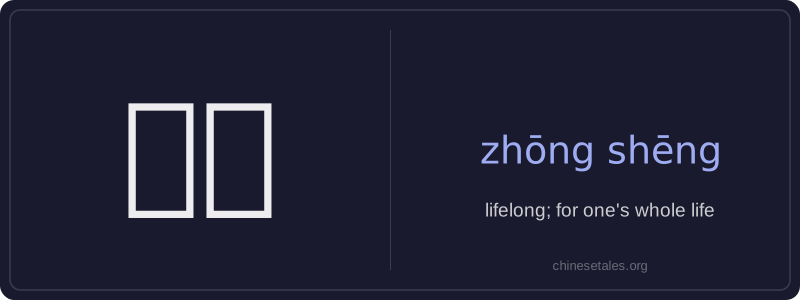
‘终生’ is an adjective meaning 'lifelong' or 'for one's entire life'. It combines the characters 终 (zhōng), meaning 'end', 'final', or 'throughout', and 生 (shēng), meaning 'life' or 'lifetime'. Together, they literally convey 'until the end of life', emphasizing permanence and unwavering commitment over a person’s full lifespan. It often describes deeply personal, irreversible, or highly significant commitments—such as love, dedication, regret, or professional pursuit—and carries a formal, solemn tone.
This word is commonly used in written Chinese and formal speech, especially in contexts involving deep emotion, moral responsibility, or lifelong consequences. Unlike the more colloquial ‘一辈子’ (yì bèi zi), which also means 'one’s whole life', ‘终生’ feels weightier and more literary—it appears frequently in essays, speeches, legal or medical documents (e.g., ‘终生监禁’), and expressions of enduring sentiment like ‘终生难忘’ (unforgettable for life). It rarely stands alone as a noun; instead, it modifies nouns directly (e.g., 终生伴侣, 终生事业).
Example Sentences
Related Words
背后
背后 literally means 'back + behind' and functions
认同
‘认同’ (tóng rèn) is a verb meaning ‘to ident
不对
不对 (bù duì) literally combines 不 (bù), meani
中学
'Zhōngxué' literally combines 'zhōng' (middle)
见面
见面 literally means 'see face' — combining 见 (t
面条
‘面条’ (miàn tiáo) literally means ‘flour str
外语
‘外语’ literally means ‘outside language’ —
认可
认可 (rèn kě) is a formal, transitive verb meani