Word Explanation
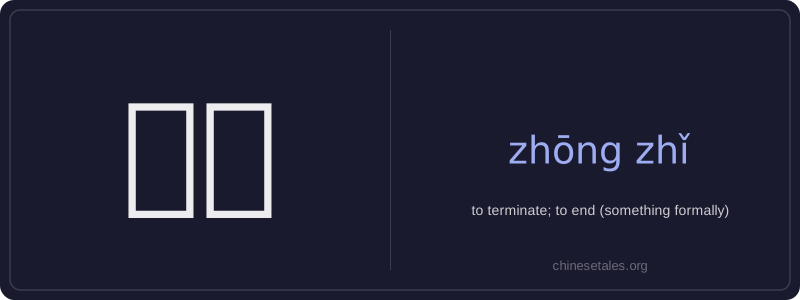
终止 (zhōng zhǐ) is a formal verb meaning 'to terminate' or 'to bring to an end', especially in official, legal, contractual, or procedural contexts. The character 终 means 'end' or 'final', and 止 means 'to stop' or 'to cease'; together they form a compound emphasizing a deliberate, conclusive halt—not just a pause, but a permanent or official conclusion. It implies authority, intention, and finality, often used when an action, agreement, process, or relationship is formally ended by decision or rule.
This word is common in written Chinese and formal speech—for example, in business contracts, government announcements, academic policies, or medical contexts (e.g., terminating a clinical trial). It is rarely used for casual or natural endings (like a conversation ending), where words like 结束 (jiéshù) or 停止 (tíngzhǐ) are more appropriate. 终止 carries a stronger sense of irrevocability and institutional weight than its synonyms, making it unsuitable for informal or emotional situations.
Example Sentences
Related Words
背后
背后 literally means 'back + behind' and functions
认同
‘认同’ (tóng rèn) is a verb meaning ‘to ident
不对
不对 (bù duì) literally combines 不 (bù), meani
中学
'Zhōngxué' literally combines 'zhōng' (middle)
见面
见面 literally means 'see face' — combining 见 (t
面条
‘面条’ (miàn tiáo) literally means ‘flour str
外语
‘外语’ literally means ‘outside language’ —
认可
认可 (rèn kě) is a formal, transitive verb meani