Word Explanation
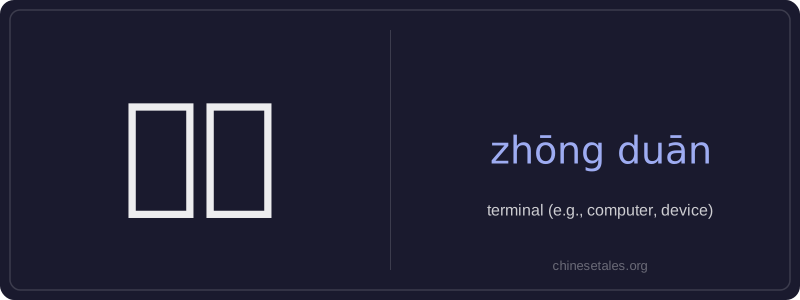
Terminal (zhōng duān) is a technical noun borrowed from English, widely used in computing, telecommunications, and electronics. Literally, 终 means 'end' or 'final', and 端 means 'end', 'tip', or 'point' — together they evoke the idea of a 'final endpoint' in a system: where data enters or exits, or where a user interacts with a network or device. It commonly refers to physical hardware (e.g., an ATM, kiosk, or POS machine) or logical interfaces (e.g., a command-line terminal on a computer).
This word appears frequently in IT contexts, public infrastructure (like subway ticketing terminals), and smart-device ecosystems. Unlike colloquial terms like 电脑 (diànnǎo, 'computer'), 终端 emphasizes functional role rather than form — a smartphone, tablet, or even a smartwatch can be called a 终端 when acting as an access point to a service. It’s neutral in register and common in both formal documentation and everyday tech talk.
Example Sentences
Related Words
背后
背后 literally means 'back + behind' and functions
认同
‘认同’ (tóng rèn) is a verb meaning ‘to ident
不对
不对 (bù duì) literally combines 不 (bù), meani
中学
'Zhōngxué' literally combines 'zhōng' (middle)
见面
见面 literally means 'see face' — combining 见 (t
面条
‘面条’ (miàn tiáo) literally means ‘flour str
外语
‘外语’ literally means ‘outside language’ —
认可
认可 (rèn kě) is a formal, transitive verb meani