Word Explanation
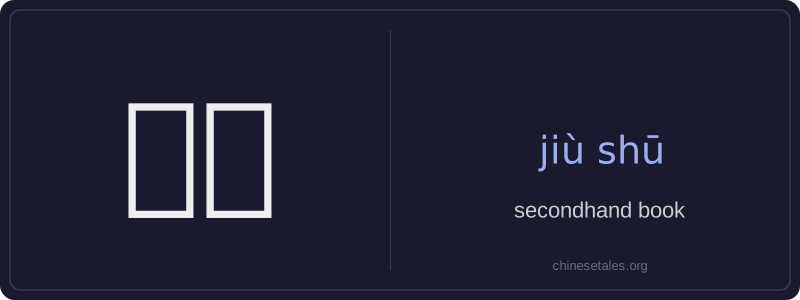
'旧书' literally means 'old book', but in modern Chinese it almost always refers specifically to a secondhand or used book — one that has been owned and read by someone else before. The character 旧 (jiù) means 'old' or 'former', indicating something no longer new or in its original condition; 书 (shū) means 'book'. Together, they form a compound noun that emphasizes the book’s prior use rather than its age alone — a newly printed copy of an ancient text is not an 旧书, but a recently bought novel from a thrift store is.
This term is commonly used in everyday contexts like campus book fairs, online marketplaces (e.g., Xianyu), or neighborhood secondhand shops. It carries neutral or even positive connotations — suggesting affordability, sustainability, or nostalgic charm. Unlike terms like 古籍 (gǔjí, 'ancient texts'), which refer to rare historical manuscripts, 旧书 is accessible, practical, and widely understood across all age groups.
Example Sentences
Related Words
背后
背后 literally means 'back + behind' and functions
认同
‘认同’ (tóng rèn) is a verb meaning ‘to ident
不对
不对 (bù duì) literally combines 不 (bù), meani
中学
'Zhōngxué' literally combines 'zhōng' (middle)
见面
见面 literally means 'see face' — combining 见 (t
面条
‘面条’ (miàn tiáo) literally means ‘flour str
外语
‘外语’ literally means ‘outside language’ —
认可
认可 (rèn kě) is a formal, transitive verb meani