Word Explanation
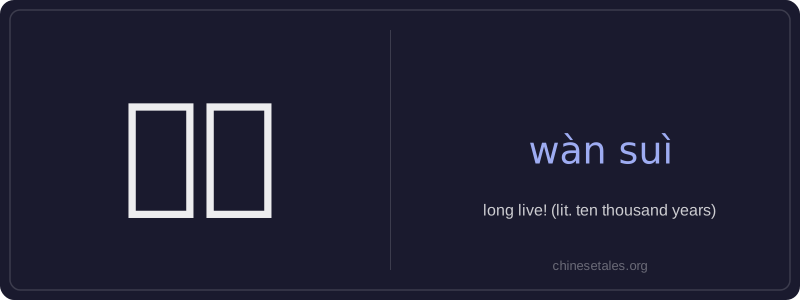
'Wàn suì' literally means 'ten thousand years'—a traditional Chinese expression of enduring longevity and supreme auspiciousness. Historically, it was reserved exclusively for emperors, symbolizing their eternal reign and divine mandate. The character 万 (wàn) means 'ten thousand', representing infinity or immeasurable scale in classical usage, while 岁 (suì) means 'year', reinforcing the temporal dimension of lasting life.
Today, 'wàn suì' functions primarily as an enthusiastic interjection meaning 'Long live!'—used in patriotic rallies, celebrations of national achievements, or spontaneous cheers at sporting events. It conveys strong collective emotion, admiration, or triumph, but remains formal and ceremonial rather than casual. Unlike everyday greetings, it carries weight and solemnity, often shouted in unison. Its tone is celebratory yet reverent, echoing historical grandeur while adapting to modern communal expression.
Example Sentences
Related Words
背后
背后 literally means 'back + behind' and functions
认同
‘认同’ (tóng rèn) is a verb meaning ‘to ident
不对
不对 (bù duì) literally combines 不 (bù), meani
中学
'Zhōngxué' literally combines 'zhōng' (middle)
见面
见面 literally means 'see face' — combining 见 (t
面条
‘面条’ (miàn tiáo) literally means ‘flour str
外语
‘外语’ literally means ‘outside language’ —
认可
认可 (rèn kě) is a formal, transitive verb meani