Word Explanation
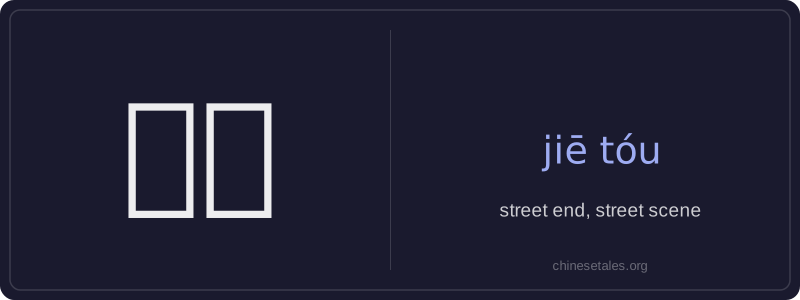
街头 literally means 'street end' or 'street head', but in modern usage it refers broadly to the public, open space of a street — especially its sidewalks, intersections, and areas where people gather, perform, or interact. The character 街 (jiē) means 'street' or 'road', while 头 (tóu) here functions as a locative suffix meaning 'end' or 'area', similar to how it appears in words like 门口 (ménkǒu, 'doorway') or 桥头 (qiáotóu, 'bridgehead').
街头 evokes a lively, informal urban atmosphere: street performers, vendors, protests, advertisements, or casual social encounters all happen 'on the street'. It often carries connotations of spontaneity, grassroots activity, or everyday city life — distinct from formal venues like theaters or offices. It's commonly used in compound phrases such as 街头艺人 (jiētou yìrén, 'street performer'), 街头文化 (jiētou wénhuà, 'street culture'), or 街头小吃 (jiētou xiǎochī, 'street food').
Example Sentences
Related Words
背后
背后 literally means 'back + behind' and functions
认同
‘认同’ (tóng rèn) is a verb meaning ‘to ident
不对
不对 (bù duì) literally combines 不 (bù), meani
中学
'Zhōngxué' literally combines 'zhōng' (middle)
见面
见面 literally means 'see face' — combining 见 (t
面条
‘面条’ (miàn tiáo) literally means ‘flour str
外语
‘外语’ literally means ‘outside language’ —
认为
‘认为’ (rèn wéi) is a transitive verb meaning