Word Explanation
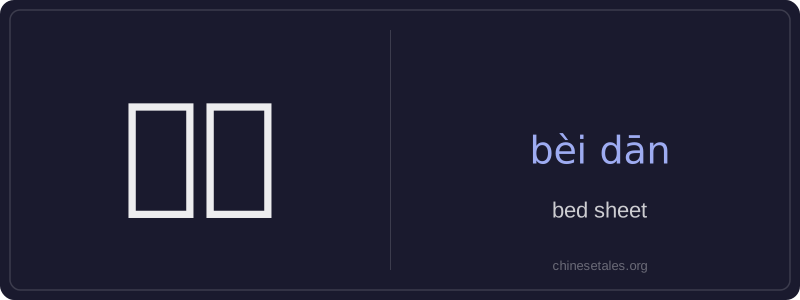
‘被单’ (bèi dān) is a common noun meaning ‘bed sheet’ — the large, flat piece of fabric that covers the mattress and is placed under or over blankets and quilts. The character 被 (bèi) originally means ‘quilt’ or ‘blanket’, while 单 (dān) means ‘single’, ‘simple’, or ‘plain’. Together, they refer to the single-layer sheet used on beds — distinguishing it from thicker bedding like quilts (被子) or comforters. It’s a standard household item in Chinese homes and often appears in contexts related to cleaning, laundry, or making the bed.
This word is neutral in register and used in both spoken and written Mandarin. Unlike English, where ‘sheet’ may refer to one of several (top sheet, bottom sheet), 被单 typically refers to the top sheet — the one laid over the quilt or blanket — though usage can vary regionally. It’s often paired with measure words like 一条 (yī tiáo) or 一床 (yī chuáng), depending on regional preference and context.
Example Sentences
Related Words
背后
背后 literally means 'back + behind' and functions
认同
‘认同’ (tóng rèn) is a verb meaning ‘to ident
不对
不对 (bù duì) literally combines 不 (bù), meani
中学
'Zhōngxué' literally combines 'zhōng' (middle)
见面
见面 literally means 'see face' — combining 见 (t
面条
‘面条’ (miàn tiáo) literally means ‘flour str
外语
‘外语’ literally means ‘outside language’ —
认为
‘认为’ (rèn wéi) is a transitive verb meaning