Word Explanation
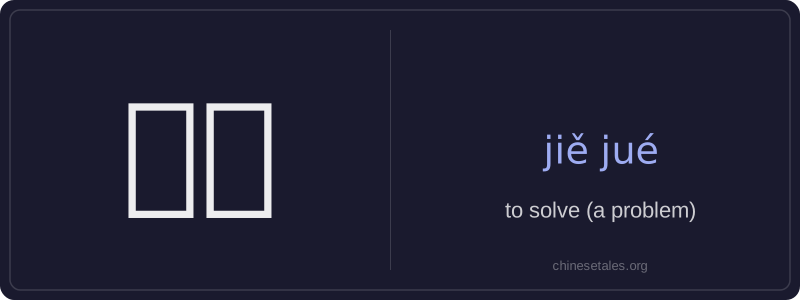
解决 (jiě jué) is a transitive verb meaning 'to solve' or 'to resolve'—typically referring to problems, difficulties, conflicts, or practical issues. The first character 解 (jiě) means 'to untie', 'to loosen', or 'to explain', suggesting the act of unbinding or clarifying something complex. The second character 决 (jué) means 'to decide' or 'to determine', implying finality and action. Together, they convey the idea of thoroughly dealing with an issue until it is settled and no longer problematic.
This word is commonly used in both spoken and written Chinese across formal and informal contexts—whether discussing technical challenges at work, personal disagreements, logistical hurdles, or everyday inconveniences. It often appears with objects like 问题 (wèntí, 'problem'), 困难 (kùnnan, 'difficulty'), or 矛盾 (máodùn, 'conflict'). While it carries a neutral-to-positive connotation, it implies effort and effectiveness—not just attempting, but succeeding in resolution.
Example Sentences
Related Words
背后
背后 literally means 'back + behind' and functions
认同
‘认同’ (tóng rèn) is a verb meaning ‘to ident
不对
不对 (bù duì) literally combines 不 (bù), meani
中学
'Zhōngxué' literally combines 'zhōng' (middle)
见面
见面 literally means 'see face' — combining 见 (t
面条
‘面条’ (miàn tiáo) literally means ‘flour str
外语
‘外语’ literally means ‘outside language’ —
认为
‘认为’ (rèn wéi) is a transitive verb meaning