Word Explanation
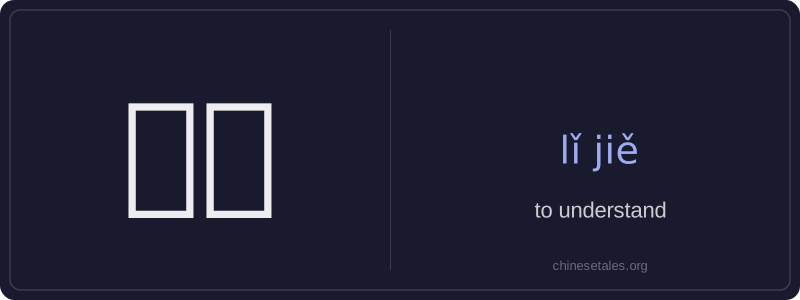
理解 means 'to understand' — a core verb expressing cognitive grasp of meaning, intention, or feeling. It combines two characters: 理 (lǐ), which conveys 'reason', 'principle', or 'logic', and 解 (jiě), meaning 'to untie', 'to unravel', or 'to explain'. Together, they evoke the idea of mentally 'untying' complexity to reach clarity — not just surface recognition, but deep, reasoned comprehension. It’s commonly used in academic, interpersonal, and emotional contexts, such as understanding instructions, another person’s perspective, or abstract concepts.
The word is neutral in register and widely appropriate in both spoken and written Chinese. Unlike simpler verbs like 懂 (dǒng), which emphasizes intuitive or practical knowing, 理解 often implies effort, reflection, or empathy — especially when used reflexively (e.g., 互相理解) or with modifiers like 深刻 (shēnkè, 'profound') or 充分 (chōngfèn, 'full'). It frequently appears in formal writing, education, counseling, and discussions about relationships or cultural differences.
Example Sentences
Related Words
背后
背后 literally means 'back + behind' and functions
认同
‘认同’ (tóng rèn) is a verb meaning ‘to ident
不对
不对 (bù duì) literally combines 不 (bù), meani
中学
'Zhōngxué' literally combines 'zhōng' (middle)
见面
见面 literally means 'see face' — combining 见 (t
面条
‘面条’ (miàn tiáo) literally means ‘flour str
外语
‘外语’ literally means ‘outside language’ —
认为
‘认为’ (rèn wéi) is a transitive verb meaning