Word Explanation
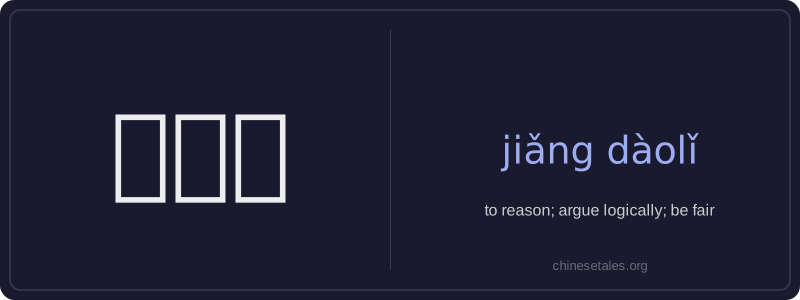
讲道理 literally means 'to speak (讲) the Way (道) and principle (理)' — rooted in classical Chinese philosophy, where 道 refers to universal truth or moral order, and 理 denotes rational principle or logic. As a verb phrase, it describes the act of appealing to reason, fairness, and objective facts rather than emotion, authority, or force. It implies a calm, respectful exchange grounded in mutual understanding.
This expression is commonly used in everyday interactions — between parents and children, teachers and students, colleagues, or even strangers resolving disputes. Saying someone 'doesn’t 讲道理' is a strong criticism, suggesting they’re being unreasonable, stubborn, or unjust. It carries a normative weight: to 讲道理 is not just to argue, but to uphold shared standards of fairness and intellectual honesty.
Example Sentences
Related Words
背后
背后 literally means 'back + behind' and functions
认同
‘认同’ (tóng rèn) is a verb meaning ‘to ident
不对
不对 (bù duì) literally combines 不 (bù), meani
中学
'Zhōngxué' literally combines 'zhōng' (middle)
见面
见面 literally means 'see face' — combining 见 (t
面条
‘面条’ (miàn tiáo) literally means ‘flour str
外语
‘外语’ literally means ‘outside language’ —
认为
‘认为’ (rèn wéi) is a transitive verb meaning