Word Explanation
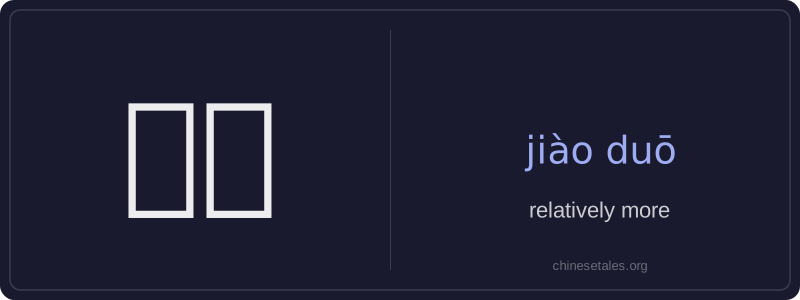
较 means 'relatively' or 'comparatively', and 多 means 'more' or 'many'. Together, 较多 functions as an adverb meaning 'relatively more' or 'a relatively large amount/number'. It expresses a comparative degree—not absolute quantity, but more than usual, expected, or compared to something else. It’s commonly used in formal and neutral registers, especially in written Chinese, reports, surveys, and everyday explanations.
Unlike the simple 多, which can stand alone as an adjective or adverb, 较多 always implies comparison—even if the second term isn’t stated explicitly (e.g., 'There are 较多 people' suggests more than normal or more than before). It often modifies nouns (e.g., 较多问题) or verbs (e.g., 较多使用), and typically appears before the word it modifies. It carries a mild, objective tone—never emotional or emphatic like 很多 or 非常多.
Example Sentences
Related Words
面条
‘面条’ (miàn tiáo) literally means ‘flour str
背后
背后 literally means 'back + behind' and functions
认同
‘认同’ (tóng rèn) is a verb meaning ‘to ident
不对
不对 (bù duì) literally combines 不 (bù), meani
中学
'Zhōngxué' literally combines 'zhōng' (middle)
见面
见面 literally means 'see face' — combining 见 (t
外语
‘外语’ literally means ‘outside language’ —
认为
‘认为’ (rèn wéi) is a transitive verb meaning