Word Explanation
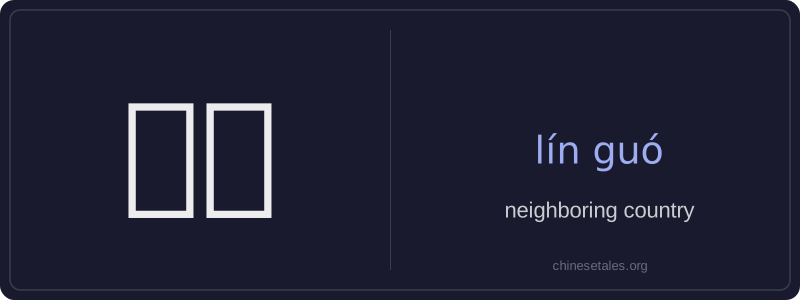
‘邻国’ literally means ‘neighbor country’ — combining 邻 (lín), meaning ‘adjacent’ or ‘next to’, and 国 (guó), meaning ‘country’ or ‘nation’. Together, they refer specifically to a country that shares a land or maritime border with another country. It’s a formal, neutral term commonly used in geography, diplomacy, news reports, and international relations — not for casual speech about friends or local communities.
The word emphasizes geographical proximity and political sovereignty: it only applies to sovereign states, not regions, provinces, or cities. For example, China’s 邻国 include Russia, India, Vietnam, and South Korea — all of which share official borders. It does not include non-bordering countries like Japan or Australia, even if they’re nearby geographically. The term carries no inherent positive or negative connotation; context determines whether the relationship is cooperative, tense, or neutral.
Example Sentences
Related Words
认同
‘认同’ (tóng rèn) is a verb meaning ‘to ident
面条
‘面条’ (miàn tiáo) literally means ‘flour str
背后
背后 literally means 'back + behind' and functions
认为
‘认为’ (rèn wéi) is a transitive verb meaning
不对
不对 (bù duì) literally combines 不 (bù), meani
中学
'Zhōngxué' literally combines 'zhōng' (middle)
见面
见面 literally means 'see face' — combining 见 (t
外语
‘外语’ literally means ‘outside language’ —