Word Explanation
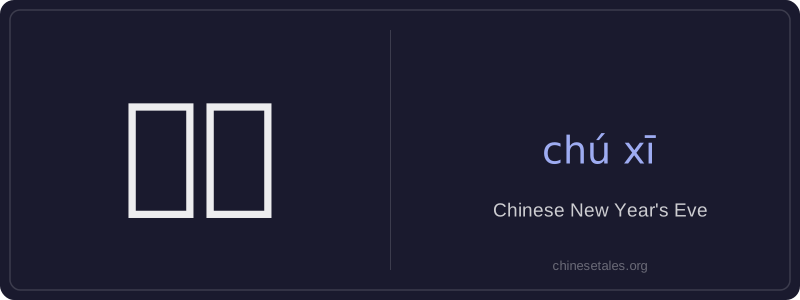
‘除夕’ (chú xī) literally means ‘removing the old evening’ — ‘除’ (chú) means ‘to remove’ or ‘to get rid of’, and ‘夕’ (xī) means ‘evening’ but historically refers to a mythical beast said to appear on the last night of the lunar year. Together, the term signifies the final evening before the Lunar New Year begins, marking the symbolic expulsion of the old year and its misfortunes. It is the most important family-oriented night in the Chinese calendar.
On 除夕, families gather for a lavish reunion dinner (nián yè fàn), stay up late (shǒu suì), set off fireworks, give red envelopes (hóng bāo), and honor ancestors. The atmosphere is warm, festive, and deeply rooted in tradition and filial piety. While it falls on the 29th or 30th day of the 12th lunar month — varying by lunar cycle — it is always the eve immediately preceding Spring Festival (Chūn Jié).
Example Sentences
Related Words
认同
‘认同’ (tóng rèn) is a verb meaning ‘to ident
面条
‘面条’ (miàn tiáo) literally means ‘flour str
背后
背后 literally means 'back + behind' and functions
认为
‘认为’ (rèn wéi) is a transitive verb meaning
不对
不对 (bù duì) literally combines 不 (bù), meani
中学
'Zhōngxué' literally combines 'zhōng' (middle)
见面
见面 literally means 'see face' — combining 见 (t
外语
‘外语’ literally means ‘outside language’ —