Word Explanation
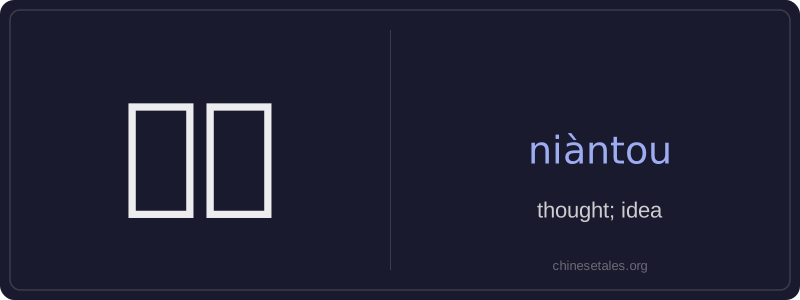
‘念头’ (niàntou) literally combines ‘念’ (niàn), meaning ‘to think’ or ‘thought’, and ‘头’ (tou), a common noun suffix that can indicate ‘a unit’, ‘an instance’, or ‘the beginning’—here suggesting ‘a single, discrete thought’. It refers to a fleeting or spontaneous idea, intention, or mental impulse, often one that arises quickly and may not yet be fully formed or acted upon. Unlike the more neutral ‘想法’ (xiǎngfǎ) or formal ‘观念’ (guāniàn), ‘念头’ carries subtle connotations of subjectivity, immediacy, and sometimes even impulsiveness or inner conflict.
This word is commonly used in introspective, psychological, or conversational contexts—especially when describing passing mental states, sudden inspirations, or even unwelcome urges (e.g., ‘坏念头’ – a bad thought). It appears frequently in literature, self-reflection, and everyday speech about motivation or hesitation. While it can be positive or negative, its tone tends to emphasize the origin and fragility of thought itself, rather than its logical content or social validity.
Example Sentences
Related Words
认同
‘认同’ (tóng rèn) is a verb meaning ‘to ident
面条
‘面条’ (miàn tiáo) literally means ‘flour str
背后
背后 literally means 'back + behind' and functions
认为
‘认为’ (rèn wéi) is a transitive verb meaning
不对
不对 (bù duì) literally combines 不 (bù), meani
中学
'Zhōngxué' literally combines 'zhōng' (middle)
见面
见面 literally means 'see face' — combining 见 (t
外语
‘外语’ literally means ‘outside language’ —