Word Explanation
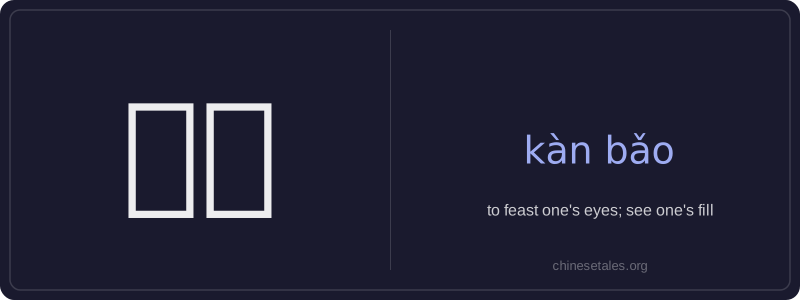
‘看饱’ is a compound verb meaning ‘to feast one’s eyes’ or ‘to see one’s fill’—it expresses the satisfaction of looking at something so thoroughly and pleasurably that no more viewing is desired. Literally, 看 means ‘to look’, and 饱 means ‘full’ (as in fullness from eating), but here it’s used metaphorically: just as the stomach feels full after eating enough, the eyes feel ‘full’ after seeing enough of something delightful or captivating.
This expression is often used with visually rich, appealing subjects—especially animals, scenery, or performances—where prolonged, appreciative observation is involved. It carries a warm, positive connotation and implies both abundance and personal enjoyment. While not formal, it’s common in spoken and informal written Chinese (e.g., travel blogs, social media captions about wildlife or pets), and frequently appears in structures like ‘看得饱’ (with 得 indicating result complement) or ‘看饱了’ (completed action).
Example Sentences
Related Words
认同
‘认同’ (tóng rèn) is a verb meaning ‘to ident
面条
‘面条’ (miàn tiáo) literally means ‘flour str
背后
背后 literally means 'back + behind' and functions
认为
‘认为’ (rèn wéi) is a transitive verb meaning
不对
不对 (bù duì) literally combines 不 (bù), meani
中学
'Zhōngxué' literally combines 'zhōng' (middle)
见面
见面 literally means 'see face' — combining 见 (t
外语
‘外语’ literally means ‘outside language’ —