Word Explanation
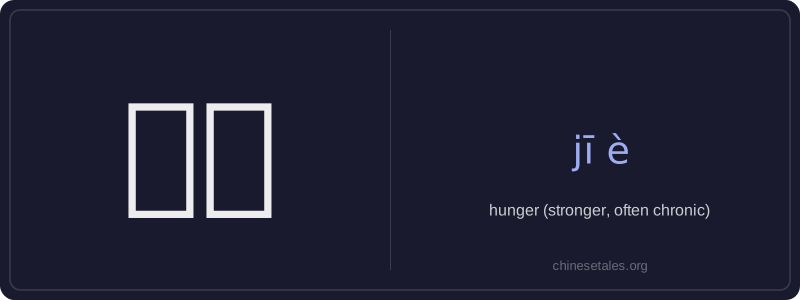
饥饿 (jī è) is a compound noun meaning 'hunger'—but it conveys a stronger, more intense, or prolonged state than the simpler word 饿 (è). While 饿 refers to ordinary, temporary hunger (e.g., before lunch), 饥饿 suggests physical deprivation, scarcity, or chronic lack of food—often with physiological or emotional weight. The first character 饥 emphasizes food shortage or famine conditions; the second, 饿, intensifies the bodily sensation of emptiness and weakness. Together, they form a formal, literary, or serious term frequently used in medical, humanitarian, or journalistic contexts.
This word appears commonly in discussions about malnutrition, poverty, disaster relief, or animal welfare—not casual daily speech. It’s rarely used in questions like 'Are you hungry?' (that’s 饿), but rather in statements like 'The refugees suffer from severe hunger' or 'Chronic hunger impairs child development.' Its tone is neutral-to-serious, never playful or light.
Example Sentences
Related Words
认同
‘认同’ (tóng rèn) is a verb meaning ‘to ident
面条
‘面条’ (miàn tiáo) literally means ‘flour str
背后
背后 literally means 'back + behind' and functions
认为
‘认为’ (rèn wéi) is a transitive verb meaning
不对
不对 (bù duì) literally combines 不 (bù), meani
中学
'Zhōngxué' literally combines 'zhōng' (middle)
见面
见面 literally means 'see face' — combining 见 (t
外语
‘外语’ literally means ‘outside language’ —