Word Explanation
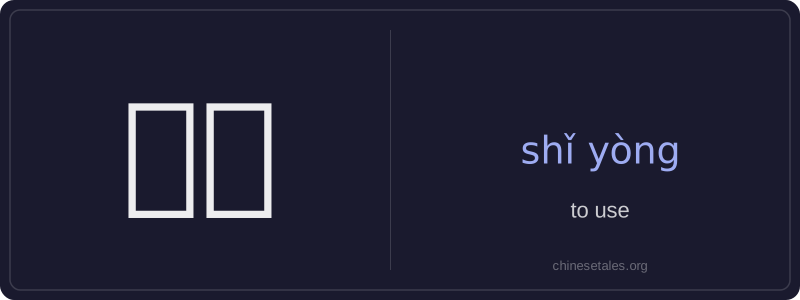
'使用' (shǐ yòng) is a compound verb meaning 'to use' — literally combining '使' (to cause, to make happen) and '用' (to use, to employ). Together, they emphasize the intentional, functional application of something — whether a tool, method, resource, or language. It's more formal and deliberate than the simpler '用', often appearing in written contexts, instructions, official notices, or technical descriptions.
This word frequently appears with objects like devices (手机、电脑), methods (这种方法), languages (中文), or resources (水资源). It can take aspect particles like 了, 过, or 着, and commonly follows subjects indicating people or organizations (e.g., 我们、公司、医生). While it's neutral in register, it’s rarely used for casual, everyday actions like eating or walking — those favor the single-character '用' or other verbs.
Example Sentences
Related Words
认同
‘认同’ (tóng rèn) is a verb meaning ‘to ident
面条
‘面条’ (miàn tiáo) literally means ‘flour str
背后
背后 literally means 'back + behind' and functions
认为
‘认为’ (rèn wéi) is a transitive verb meaning
不对
不对 (bù duì) literally combines 不 (bù), meani
中学
'Zhōngxué' literally combines 'zhōng' (middle)
见面
见面 literally means 'see face' — combining 见 (t
外语
‘外语’ literally means ‘outside language’ —