Word Explanation
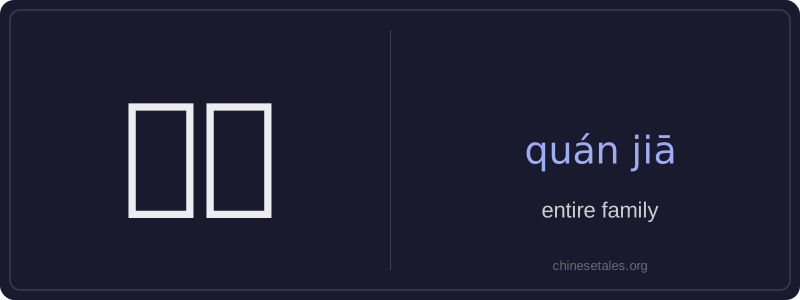
全家 (quán jiā) literally combines 全 (quán), meaning 'entire' or 'all', and 家 (jiā), meaning 'family' or 'home'. Together, it means 'the entire family' — referring to all members of a household, typically including parents, children, and sometimes grandparents living together. It emphasizes inclusivity and wholeness, not just a partial group.
This noun is commonly used in everyday contexts such as planning activities ('We’re going on vacation with the whole family'), describing shared experiences ('The whole family watched the Lunar New Year gala'), or expressing collective identity ('Our whole family supports this decision'). It’s neutral in register — appropriate in both spoken and written Chinese — and often appears with measure words like 一 (yī) or demonstratives like 这 (zhè) or 那 (nà). Unlike 家人 (jiā rén), which can refer more loosely to family members regardless of co-residence, 全家 strongly implies the full domestic unit present together.
Example Sentences
Related Words
认同
‘认同’ (tóng rèn) is a verb meaning ‘to ident
面条
‘面条’ (miàn tiáo) literally means ‘flour str
背后
背后 literally means 'back + behind' and functions
认为
‘认为’ (rèn wéi) is a transitive verb meaning
不对
不对 (bù duì) literally combines 不 (bù), meani
中学
'Zhōngxué' literally combines 'zhōng' (middle)
见面
见面 literally means 'see face' — combining 见 (t
外语
‘外语’ literally means ‘outside language’ —