Word Explanation
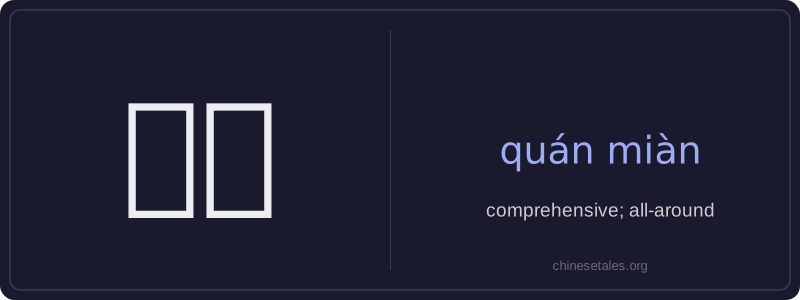
全面 (quán miàn) is an adjective meaning 'comprehensive' or 'all-around,' emphasizing completeness and coverage across all relevant aspects. The character 全 means 'entire' or 'whole,' while 面 means 'side' or 'aspect'—together, they literally convey 'all sides' or 'every aspect.' It is commonly used to describe plans, evaluations, development, or understanding that leaves no important element overlooked.
This word frequently appears in formal, academic, or policy-related contexts—for example, when discussing holistic education, comprehensive medical care, or all-around personal growth. It often modifies nouns directly (e.g., 全面检查, 全面发展) and can also function as a predicate with 是 or 很 (e.g., 这个方案很全面). While it conveys thoroughness, it does not imply perfection—rather, it stresses breadth and inclusiveness across recognized dimensions.
Example Sentences
Related Words
认同
‘认同’ (tóng rèn) is a verb meaning ‘to ident
面条
‘面条’ (miàn tiáo) literally means ‘flour str
背后
背后 literally means 'back + behind' and functions
认为
‘认为’ (rèn wéi) is a transitive verb meaning
不对
不对 (bù duì) literally combines 不 (bù), meani
中学
'Zhōngxué' literally combines 'zhōng' (middle)
见面
见面 literally means 'see face' — combining 见 (t
外语
‘外语’ literally means ‘outside language’ —