Word Explanation
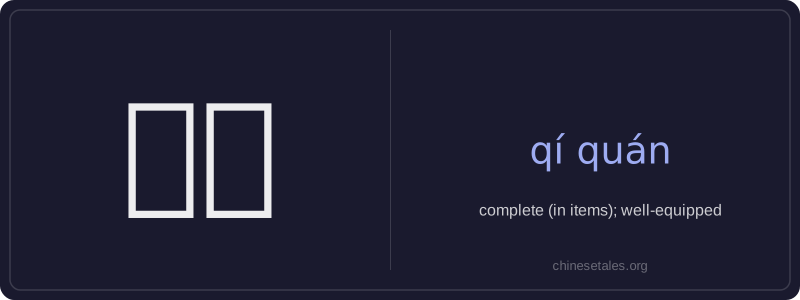
齐 (qí) means 'in order', 'neat', or 'all together', while 全 (quán) means 'complete', 'entire', or 'whole'. Together, 齐全 (qí quán) describes a collection or set in which all necessary or expected items are present and accounted for — emphasizing completeness and readiness. It’s commonly used to describe inventories, supplies, equipment, or facilities that meet full requirements.
This word is often found in practical, everyday contexts: a well-stocked store, a fully equipped office, a kitchen with all utensils, or a medical clinic with all standard instruments. Unlike the more abstract term 完整 (wánzhěng, 'intact' or 'integral'), 齐全 focuses specifically on the presence of required components — not just wholeness, but functional sufficiency. It’s typically used predicatively (e.g., 这家店的工具很齐全) or attributively before nouns with 的 (e.g., 齐全的设施).
Example Sentences
Related Words
认同
‘认同’ (tóng rèn) is a verb meaning ‘to ident
面条
‘面条’ (miàn tiáo) literally means ‘flour str
背后
背后 literally means 'back + behind' and functions
认为
‘认为’ (rèn wéi) is a transitive verb meaning
不对
不对 (bù duì) literally combines 不 (bù), meani
中学
'Zhōngxué' literally combines 'zhōng' (middle)
见面
见面 literally means 'see face' — combining 见 (t
外语
‘外语’ literally means ‘outside language’ —