Word Explanation
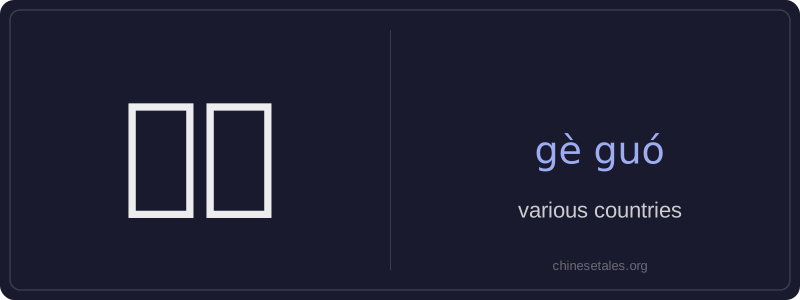
各国 literally means 'each country' or 'various countries', formed by 各 (gè, 'each; every') and 国 (guó, 'country; nation'). It functions as a collective noun referring to multiple countries simultaneously—often in contexts involving international relations, global comparisons, or cross-national phenomena. Unlike the singular 国 or plural 国家们 (which is rarely used), 各国 emphasizes diversity and plurality without specifying exact numbers.
This term commonly appears in formal, written, or news-oriented Chinese—such as reports on diplomacy, trade, education exchanges, or environmental policy. It carries a neutral, inclusive tone and implies breadth rather than exclusivity: for example, 各国政府 ('governments of various countries') suggests cooperation across national boundaries. While grammatically plural, it does not take plural markers like 们, nor does it require a classifier—it stands alone as a compound noun.
Example Sentences
Related Words
认同
‘认同’ (tóng rèn) is a verb meaning ‘to ident
面条
‘面条’ (miàn tiáo) literally means ‘flour str
背后
背后 literally means 'back + behind' and functions
认为
‘认为’ (rèn wéi) is a transitive verb meaning
不对
不对 (bù duì) literally combines 不 (bù), meani
中学
'Zhōngxué' literally combines 'zhōng' (middle)
见面
见面 literally means 'see face' — combining 见 (t
外语
‘外语’ literally means ‘outside language’ —