Word Explanation
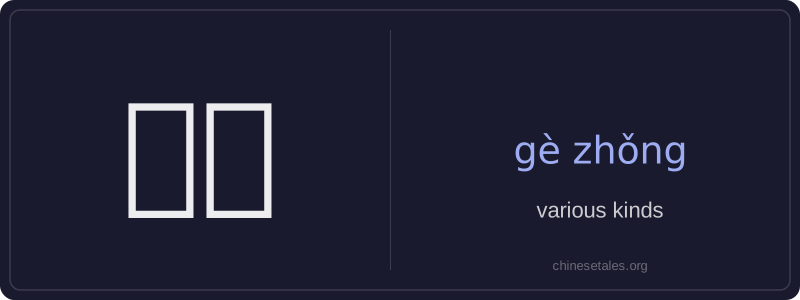
'Various kinds' is a noun phrase formed by combining 各 (gè), meaning 'each' or 'every', and 种 (zhǒng), meaning 'kind', 'type', or 'species'. Together, they emphasize diversity within a category — not just 'many', but 'many distinct types'. It functions as a noun modifier and typically appears before a noun (e.g., 各种动物) or stands alone as a nominal subject/object (e.g., 这里有各种). It’s neutral in register and common in both spoken and written Chinese, especially when listing or generalizing across categories like animals, foods, or products.
The phrase implies variety without specifying exact numbers or types — it suggests inclusiveness rather than exhaustiveness. Unlike quantifiers such as 许多 or 很多, 各种 carries an inherent sense of heterogeneity: the items differ qualitatively, not just quantitatively. It’s frequently used in descriptive contexts, educational materials, menus, and nature writing — for instance, to highlight biodiversity or product range.
Example Sentences
Related Words
认同
‘认同’ (tóng rèn) is a verb meaning ‘to ident
面条
‘面条’ (miàn tiáo) literally means ‘flour str
背后
背后 literally means 'back + behind' and functions
认为
‘认为’ (rèn wéi) is a transitive verb meaning
不对
不对 (bù duì) literally combines 不 (bù), meani
中学
'Zhōngxué' literally combines 'zhōng' (middle)
见面
见面 literally means 'see face' — combining 见 (t
外语
‘外语’ literally means ‘outside language’ —