Word Explanation
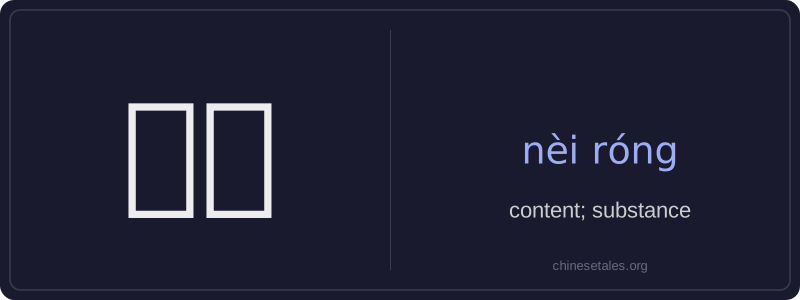
内容 (nèi róng) literally combines 内 (nèi, 'inside') and 容 (róng, 'to contain' or 'capacity'), suggesting what is contained within something — the essential substance or material. It refers to the substance, subject matter, or information conveyed in speech, writing, media, or any communicative form. Unlike 表面 (surface) or 形式 (form), 内容 emphasizes meaning and informational core.
This word appears frequently in academic, professional, and everyday contexts: course content, article content, video content, or even the content of a conversation. It’s neutral in register and widely used across spoken and written Chinese. While it can occasionally refer to physical contents (e.g., contents of a box), that usage is rare — for physical items, 内部的东西 or 具体物品 is preferred. Content here is abstract and conceptual, not literal matter.
Example Sentences
Related Words
认同
‘认同’ (tóng rèn) is a verb meaning ‘to ident
面条
‘面条’ (miàn tiáo) literally means ‘flour str
背后
背后 literally means 'back + behind' and functions
认为
‘认为’ (rèn wéi) is a transitive verb meaning
不对
不对 (bù duì) literally combines 不 (bù), meani
中学
'Zhōngxué' literally combines 'zhōng' (middle)
见面
见面 literally means 'see face' — combining 见 (t
外语
‘外语’ literally means ‘outside language’ —