Word Explanation
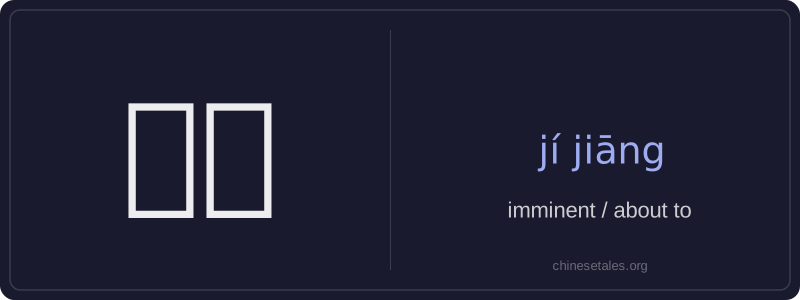
即将 is an adverb meaning 'imminent' or 'about to (happen)' — it signals that an event is very close in time, usually within hours, days, or at most a few weeks. The character 即 means 'immediately' or 'right now', while 将 indicates future intention or expectation; together, they form a fixed compound expressing near-future certainty, stronger and more formal than 就要 or 快要.
This word is commonly used in written Chinese — news headlines, official announcements, academic writing, and formal speech — to convey urgency or scheduled inevitability. It rarely appears in casual conversation. 即将 always modifies a verb phrase and cannot stand alone as a subject or object. It’s often followed by verbs like 到来, 开始, 举行, 发布, or 结束, and frequently appears with time markers like 明天, 下周, or 近期 to reinforce temporal proximity.
Example Sentences
Related Words
认同
‘认同’ (tóng rèn) is a verb meaning ‘to ident
面条
‘面条’ (miàn tiáo) literally means ‘flour str
背后
背后 literally means 'back + behind' and functions
认为
‘认为’ (rèn wéi) is a transitive verb meaning
不对
不对 (bù duì) literally combines 不 (bù), meani
中学
'Zhōngxué' literally combines 'zhōng' (middle)
见面
见面 literally means 'see face' — combining 见 (t
外语
‘外语’ literally means ‘outside language’ —