Word Explanation
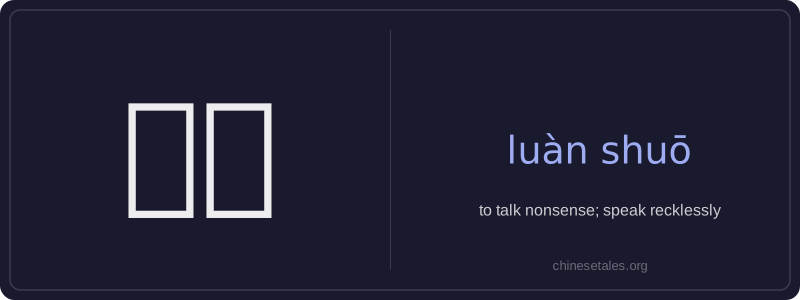
'乱说' literally combines '乱' (luàn), meaning 'chaotic', 'disorderly', or 'reckless', and '说' (shuō), meaning 'to speak' or 'to say'. Together, they form a verb meaning 'to talk nonsense', 'to speak without thinking', or 'to make unfounded statements'. It carries a negative connotation and implies carelessness, lack of truthfulness, or inappropriate timing — not just speaking loudly or quickly, but speaking in a way that is irresponsible, inaccurate, or socially inappropriate.
This word is commonly used in everyday spoken Chinese to scold or warn someone — especially children, students, or colleagues — who are spreading rumors, exaggerating, guessing wildly, or making baseless claims. It’s often paired with modal verbs like '别' (don’t) or '不能' (must not), and frequently appears in imperative or admonishing contexts. While it can be used lightly among friends, it’s generally informal and slightly critical, rarely appearing in formal writing or official speech.
Example Sentences
Related Words
认同
‘认同’ (tóng rèn) is a verb meaning ‘to ident
面条
‘面条’ (miàn tiáo) literally means ‘flour str
背后
背后 literally means 'back + behind' and functions
认为
‘认为’ (rèn wéi) is a transitive verb meaning
不对
不对 (bù duì) literally combines 不 (bù), meani
中学
'Zhōngxué' literally combines 'zhōng' (middle)
见面
见面 literally means 'see face' — combining 见 (t
外语
‘外语’ literally means ‘outside language’ —