Word Explanation
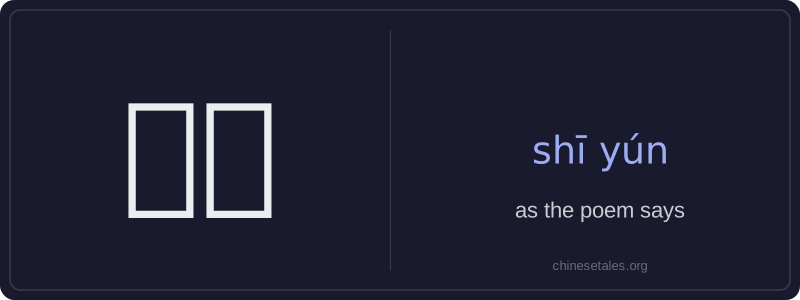
'Shī yún' literally means 'the poem says' and functions as a classical literary conjunction used to introduce a quoted line from a poem—especially from the Shījīng (Classic of Poetry) or other canonical verse. The character 诗 (shī) means 'poem' or 'poetry', while 云 (yún) is an archaic verb meaning 'to say' or 'to state'. Together, they form a fixed, formal expression that signals the speaker is citing poetic authority to support or illustrate a point.
This phrase appears frequently in classical Chinese texts, scholarly commentary, and formal speeches or essays drawing on traditional wisdom. It carries a respectful, erudite tone and is rarely used in casual speech. Modern writers may employ it deliberately for rhetorical elegance or cultural resonance—often when referencing nature imagery, moral principles, or seasonal themes, which aligns with its frequent use in poems about plants, landscapes, and agricultural cycles.
Example Sentences
Related Words
认同
‘认同’ (tóng rèn) is a verb meaning ‘to ident
面条
‘面条’ (miàn tiáo) literally means ‘flour str
背后
背后 literally means 'back + behind' and functions
认为
‘认为’ (rèn wéi) is a transitive verb meaning
不对
不对 (bù duì) literally combines 不 (bù), meani
中学
'Zhōngxué' literally combines 'zhōng' (middle)
见面
见面 literally means 'see face' — combining 见 (t
外语
‘外语’ literally means ‘outside language’ —