Word Explanation
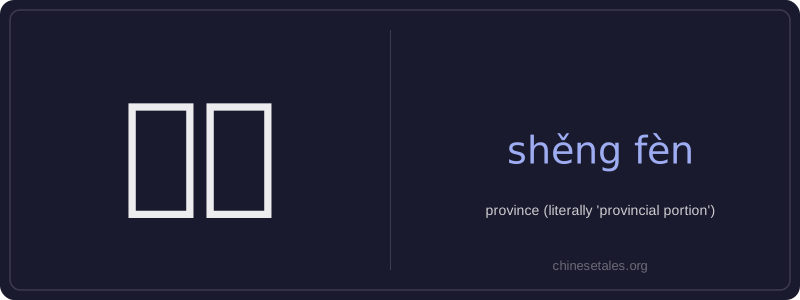
‘省份’ literally means 'provincial portion' — combining 省 (shěng), meaning 'province', and 份 (fèn), meaning 'portion' or 'division'. It refers to one of China’s 23 provincial-level administrative divisions (e.g., Guangdong, Sichuan, Heilongjiang), each with its own government, geography, and cultural identity. Unlike informal terms like ‘省’, 省份 emphasizes the concept of a province as an official, bounded territorial unit within the national structure.
The word is commonly used in formal, geographic, demographic, or administrative contexts — for example, when discussing regional policies, population statistics, or travel planning across China. It appears frequently in news reports, textbooks, maps, and government documents. While ‘省’ alone can often substitute in casual speech, ‘省份’ adds precision and formality, especially when distinguishing provinces from other administrative units like municipalities (直辖市) or autonomous regions (自治区).
Example Sentences
Related Words
认同
‘认同’ (tóng rèn) is a verb meaning ‘to ident
面条
‘面条’ (miàn tiáo) literally means ‘flour str
背后
背后 literally means 'back + behind' and functions
认为
‘认为’ (rèn wéi) is a transitive verb meaning
不对
不对 (bù duì) literally combines 不 (bù), meani
中学
'Zhōngxué' literally combines 'zhōng' (middle)
见面
见面 literally means 'see face' — combining 见 (t
外语
‘外语’ literally means ‘outside language’ —