Word Explanation
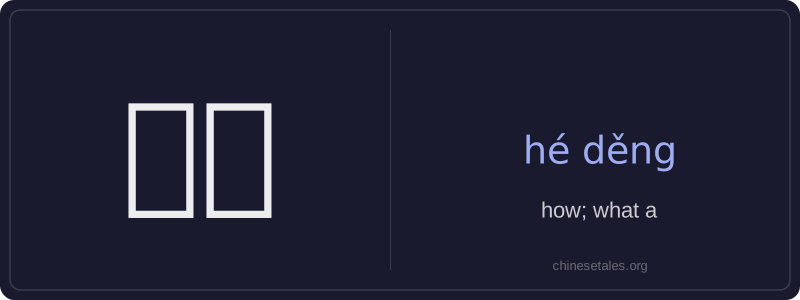
‘何等’ is an emphatic adverb meaning ‘how’ or ‘what a’, used to express strong emotion—especially admiration, astonishment, or dismay—before an adjective or noun phrase. Though composed of the interrogative pronoun 何 (‘what’) and the classifier 等 (‘kind, sort, class’), together they function as a fixed literary expression, not a literal ‘what kind’. It’s more formal and expressive than everyday alternatives like 多 or 真, and appears frequently in written Chinese, speeches, and emotive commentary.
This term intensifies the following word, much like ‘what a’ in English: ‘what a surprise!’ or ‘how beautiful!’. It typically precedes adjectives (e.g., 何等壮观), nouns (e.g., 何等勇气), or noun phrases, and almost never stands alone. While common in modern standard Chinese, it carries a slightly elevated or rhetorical tone—less frequent in casual conversation but powerful in persuasive or descriptive contexts.
Example Sentences
Related Words
认同
‘认同’ (tóng rèn) is a verb meaning ‘to ident
面条
‘面条’ (miàn tiáo) literally means ‘flour str
背后
背后 literally means 'back + behind' and functions
认为
‘认为’ (rèn wéi) is a transitive verb meaning
不对
不对 (bù duì) literally combines 不 (bù), meani
中学
'Zhōngxué' literally combines 'zhōng' (middle)
见面
见面 literally means 'see face' — combining 见 (t
外语
‘外语’ literally means ‘outside language’ —