Word Explanation
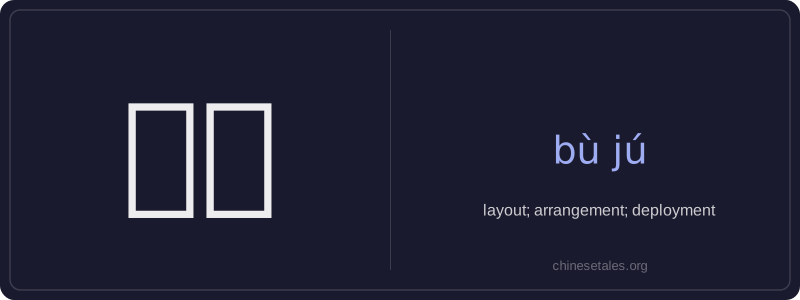
布局 (bù jú) literally combines 布 (bù), meaning 'to spread out' or 'to deploy', and 局 (jú), meaning 'situation', 'scene', or 'a bounded arrangement'. Together, they convey the idea of how elements are deliberately arranged in space or time — whether it’s furniture in a room, troops on a battlefield, components on a circuit board, or scenes in a film. It emphasizes intentionality and structure, not random placement.
The word is widely used in both concrete and abstract contexts: architecture, urban planning, web design, military strategy, Go (weiqi) games, and even business strategy. Unlike simple words for 'arrangement' like 安排 (ānpái), 布局 implies foresight, spatial or systemic thinking, and often long-term planning. It frequently appears in formal or technical discourse but is also common in everyday descriptions of room setup or app interfaces.
Example Sentences
Related Words
认同
‘认同’ (tóng rèn) is a verb meaning ‘to ident
面条
‘面条’ (miàn tiáo) literally means ‘flour str
背后
背后 literally means 'back + behind' and functions
认为
‘认为’ (rèn wéi) is a transitive verb meaning
不对
不对 (bù duì) literally combines 不 (bù), meani
中学
'Zhōngxué' literally combines 'zhōng' (middle)
见面
见面 literally means 'see face' — combining 见 (t
外语
‘外语’ literally means ‘outside language’ —