Word Explanation
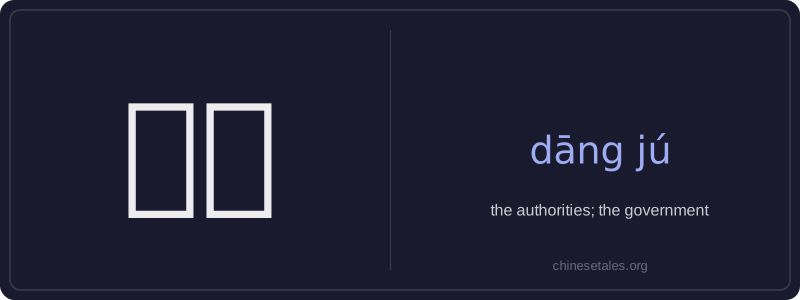
‘当局’ literally combines ‘当’ (dāng), meaning ‘to be in charge of’ or ‘current,’ and ‘局’ (jú), meaning ‘bureau,’ ‘office,’ or ‘department.’ Together, they form a formal, collective noun referring to the governing or administrative body currently in power — most commonly ‘the authorities’ or ‘the government’ in English. It is often used in news reports, official statements, and academic writing to refer to state-level decision-makers without specifying a particular branch or agency.
The term carries a neutral-to-slightly-formal register and is rarely used in casual conversation. It may refer broadly to central or local government organs, regulatory agencies, or law enforcement bodies depending on context. While not inherently negative, its tone can shift based on surrounding words — for example, ‘当局的决定’ (the authorities’ decision) sounds objective, whereas ‘当局受到批评’ (the authorities face criticism) implies scrutiny. It’s typically used with verbs like ‘呼吁’ (appeal to), ‘回应’ (respond), or ‘采取措施’ (take measures).
Example Sentences
Related Words
认同
‘认同’ (tóng rèn) is a verb meaning ‘to ident
面条
‘面条’ (miàn tiáo) literally means ‘flour str
背后
背后 literally means 'back + behind' and functions
认为
‘认为’ (rèn wéi) is a transitive verb meaning
不对
不对 (bù duì) literally combines 不 (bù), meani
中学
'Zhōngxué' literally combines 'zhōng' (middle)
见面
见面 literally means 'see face' — combining 见 (t
外语
‘外语’ literally means ‘outside language’ —