Word Explanation
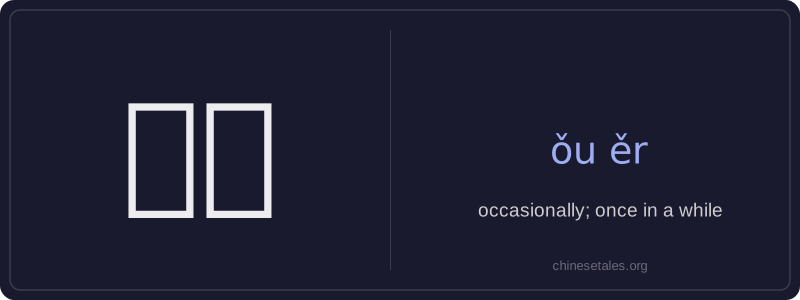
偶尔 (ǒu ěr) is an adverb meaning 'occasionally' or 'once in a while'. It describes actions or events that happen infrequently and irregularly—not on a set schedule, but sporadically. Though the character 偶 originally means 'even number' or 'coincidence', and 尔 is an archaic pronoun ('you' or 'thus'), together they form a fixed compound expressing rarity and unpredictability. The word carries a neutral, slightly literary tone and is common in both spoken and written Chinese.
It typically appears before a verb or adjective in sentence-initial or mid-sentence position, often followed by verbs like 去 (go), 吃 (eat), or 看 (watch). Unlike frequency adverbs such as 经常 (often) or 总是 (always), 偶尔 implies no routine—it highlights exception rather than habit. It’s frequently used in personal routines, habits, or lifestyle descriptions, especially when contrasting with more regular behavior.
Example Sentences
Related Words
认同
‘认同’ (tóng rèn) is a verb meaning ‘to ident
面条
‘面条’ (miàn tiáo) literally means ‘flour str
背后
背后 literally means 'back + behind' and functions
认为
‘认为’ (rèn wéi) is a transitive verb meaning
不对
不对 (bù duì) literally combines 不 (bù), meani
中学
'Zhōngxué' literally combines 'zhōng' (middle)
见面
见面 literally means 'see face' — combining 见 (t
外语
‘外语’ literally means ‘outside language’ —