Word Explanation
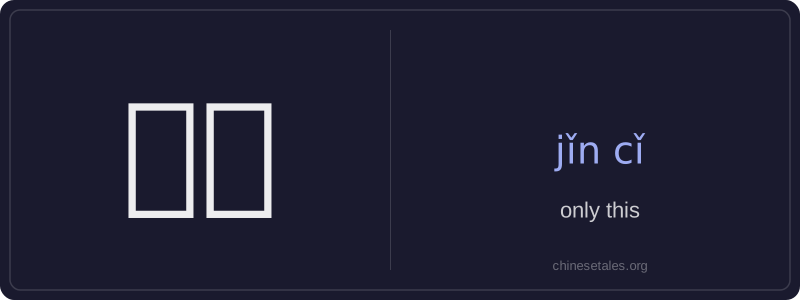
仅此 means 'only this' or 'nothing more than this' and functions primarily as an adverb to emphasize exclusivity or limitation. The character 仅 (jǐn) means 'only' or 'merely', while 此 (cǐ) means 'this'. Together, they form a concise, formal expression indicating that something is strictly limited to the item, action, or situation just mentioned — nothing else is included, allowed, or relevant.
This phrase is commonly used in written Chinese, official notices, instructions, or polite refusals where precision and clarity are important. It often appears at the beginning or end of a sentence and carries a slightly formal or literary tone. Learners should note that 仅此 is not typically used in casual spoken conversation; instead, phrases like 就这么多了 or 只有这个 are more common in everyday speech.
Example Sentences
Related Words
认同
‘认同’ (tóng rèn) is a verb meaning ‘to ident
面条
‘面条’ (miàn tiáo) literally means ‘flour str
背后
背后 literally means 'back + behind' and functions
认为
‘认为’ (rèn wéi) is a transitive verb meaning
不对
不对 (bù duì) literally combines 不 (bù), meani
中学
'Zhōngxué' literally combines 'zhōng' (middle)
见面
见面 literally means 'see face' — combining 见 (t
外语
‘外语’ literally means ‘outside language’ —