Word Explanation
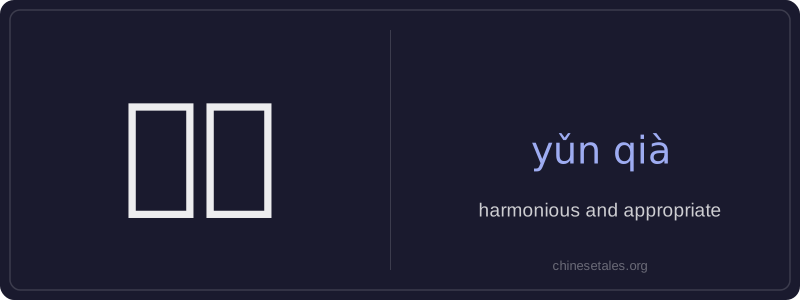
允洽 (yǔn qià) is a formal literary adjective meaning 'harmonious and appropriate'—describing a state where elements align smoothly, respectfully, and suitably, often in interpersonal or ceremonial contexts. The character 允 means 'to permit; to agree; fitting', carrying connotations of sincerity and legitimacy, while 洽 means 'to harmonize; to blend well; to be thoroughly acquainted', suggesting mutual understanding and seamless compatibility. Together, they emphasize both moral appropriateness and relational harmony.
This term appears mainly in classical-style writing, official speeches, diplomatic statements, or descriptions of ideal social or ritual interactions—such as harmonious family relations, respectful negotiations, or well-coordinated cultural events. It’s rarely used in casual speech and never with concrete objects (e.g., not for describing food or weather). Its tone is elevated and positive, evoking Confucian ideals of propriety and resonance between people or principles.
Example Sentences
Related Words
认同
‘认同’ (tóng rèn) is a verb meaning ‘to ident
面条
‘面条’ (miàn tiáo) literally means ‘flour str
背后
背后 literally means 'back + behind' and functions
认为
‘认为’ (rèn wéi) is a transitive verb meaning
不对
不对 (bù duì) literally combines 不 (bù), meani
中学
'Zhōngxué' literally combines 'zhōng' (middle)
见面
见面 literally means 'see face' — combining 见 (t
外语
‘外语’ literally means ‘outside language’ —